








An Idea on a Potato Sack
The story of “Blue Suede Shoes” begins with a piece of advice from a friend and a moment of late-night inspiration. Fellow Sun Records artist Johnny Cash reportedly told Perkins about an airman he knew in Germany who was fiercely protective of his military-issued
dress shoes, which he called his “blue suede shoes.” The idea didn’t fully spark until Perkins was playing a dance and witnessed a young man tell his date, “Don't step on my suedes!” The image of a man valuing his footwear over his beautiful dance partner stuck with Perkins. Waking up around 3 a.m., he couldn't find any paper and famously scribbled the lyrics on a potato sack, starting with the classic nursery-rhyme cadence, “One for the money, two for the show…”
The Session at Sun
On December 19, 1955, Carl Perkins and his band entered the fabled Sun Studio at 706 Union Avenue in Memphis, Tennessee. At the helm was Sam Phillips, the visionary producer who had recently sold Elvis Presley’s contract to RCA for a then-staggering $35,000. Phillips was pouring that money back into his remaining artists, and he believed Perkins had what it took to be a star. The pressure was on to create a hit that could capture the raw, hybrid energy of country and rhythm and blues that Phillips was chasing—the sound that would become known as rockabilly. Perkins, a sharecropper’s son, was a gifted guitarist and songwriter, and “Blue Suede Shoes” felt different; it felt like the one.
The 'Mistake' and the Master
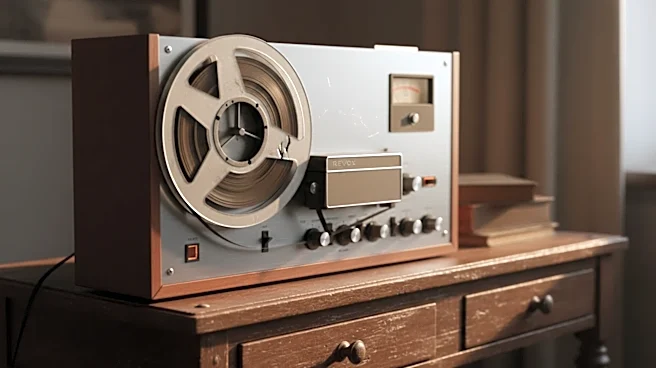
They laid down a take, but Perkins, a perfectionist, wasn't happy. During the recording, he stumbled over a line. Instead of singing his intended lyric, he blurted out, “Go, cat, go!” Frustrated, he stopped and told Phillips he wanted to scrap the take and start over. He was ready to throw the tape away. But Phillips, whose genius lay in recognizing that raw energy trumped flawless precision, stopped him. He heard something special in that take. According to legend, Phillips insisted, “That's the one! That's a hit.” He saw the accidental lyric not as a mistake, but as the very soul of this new sound, christening Perkins his “rockabilly cat.” That imperfect, energetic take was the one that was pressed to vinyl and shipped out to the world.
Fame, Fate, and a Tragic Twist
Phillips’ instincts were golden. Released in early 1956, “Blue Suede Shoes” was a commercial monster, becoming the first song to climb the pop, country, and R&B charts simultaneously. It sold millions of copies, and Perkins was booked for major national television appearances on “The Perry Como Show” and “The Ed Sullivan Show” that would have cemented his status as rock and roll’s new king. But fate intervened cruelly. While driving to New York for those career-making appearances, Perkins and his band were in a horrific car accident. Perkins suffered a broken neck, and his brother Jay was seriously injured, eventually passing away from his injuries two years later. Lying in a hospital bed, Perkins watched as Elvis Presley performed “Blue Suede Shoes” on national television, catapulting Presley’s own version into the stratosphere and forever linking the song with his name in the minds of many.