





The Corporate Kick-Off
Let’s be honest: official tournament anthems are born from a marketing plan. Since the first widely recognized World Cup song in 1962, the goal has been to create a globally accessible, commercially viable product that helps brand the event. These songs
are focus-grouped for catchiness and designed to be multilingual, culturally neutral, and, above all, unifying. Artists like Shakira, Pitbull, and Jennifer Lopez have been tasked with creating a soundtrack for the planet, a jingle that can be played in stadiums from Doha to Dallas and feel equally at home. The intent isn't to create high art; it's to create a sonic identity for a month-long festival of football. The song is part of the package, along with the mascot and the official match ball.
From Broadcast to Brainstem
The secret to an anthem's staying power begins with sheer, brute-force repetition. For four weeks, that one song is inescapable. It’s the background music for pre-game analysis, the score for highlight reels, the track blaring during halftime, and the foundation of countless TV commercials. This media saturation is the first step in turning a simple song into a cultural artifact. The constant exposure drills the melody and a few key lyrical hooks into the collective consciousness of billions of viewers. It’s a psychological process; the music becomes associated with the heightened emotion of the tournament itself. The song ceases to be just a song and becomes a trigger, a sonic shortcut to the feeling of that specific summer.
The Magic Ingredient: A Legend's Last Dance
Here is where the alchemy truly begins. An anthem, on its own, is just a catchy tune. But when its constant repetition coincides with the high drama of a legendary player’s final tournament, it absorbs the story. The song becomes the accidental soundtrack to a momentous farewell. Every triumph, every moment of despair, every step of that final journey is set against this one, ever-present melody. The generic, corporate-approved lyrics about unity and victory are suddenly imbued with the very specific, very human narrative of a hero's goodbye. The anthem doesn't create the memory, but it becomes the vessel that holds it.
Case Study: Zidane's Tragic Finale
Consider the 2006 World Cup in Germany. The official anthem was a duet by Il Divo and Toni Braxton called “The Time of Our Lives.” For most of the tournament, it was just pleasant background noise. But that was Zinedine Zidane’s last stand. The French icon, who had announced his retirement, put on a masterclass, including a legendary performance against Brazil. Then came the final. His audacious Panenka penalty, followed by the infamous headbutt that led to a shocking red card, became one of the most dramatic exits in sports history. Suddenly, “The Time of Our Lives” was no longer a generic title. It became tragically ironic, forever fused to the memory of Zidane's beautiful, brilliant, and brutal farewell. The song didn’t just play during his farewell; it became his farewell.
When the Fans Choose Their Own Anthem
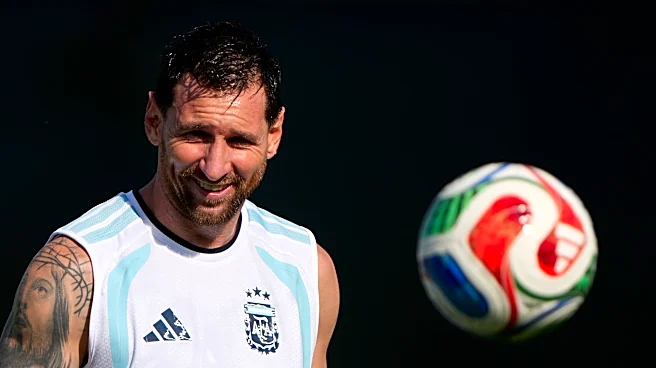
Sometimes, the official song is completely overshadowed by an organic, fan-driven alternative that better captures the narrative. Look no further than the 2022 World Cup and Lionel Messi's final, victorious campaign. The official anthem, "Hayya Hayya (Better Together)," was largely ignored by the champions. Instead, the Argentinian team and their fans adopted "Muchachos, Ahora Nos Volvimos a Ilusionar" (Boys, We Have Our Hopes Up Again). This repurposed pop song, with lyrics rewritten by a fan, told the story of Argentina's journey, referencing past heartbreaks and the legacies of both Diego Maradona and Messi. It was a song of hope, history, and destiny. The players sang it in the locker room, and fans sang it in the streets, making it the true soundtrack to Messi’s crowning achievement.