








The Sticker Shock: Billions for a One-Month Party
The first thing to understand about hosting a tournament like the FIFA World Cup is the colossal upfront cost. We’re not talking about a few million for fresh paint. We’re talking billions. Qatar’s 2022 World Cup is the most extreme example, with an estimated
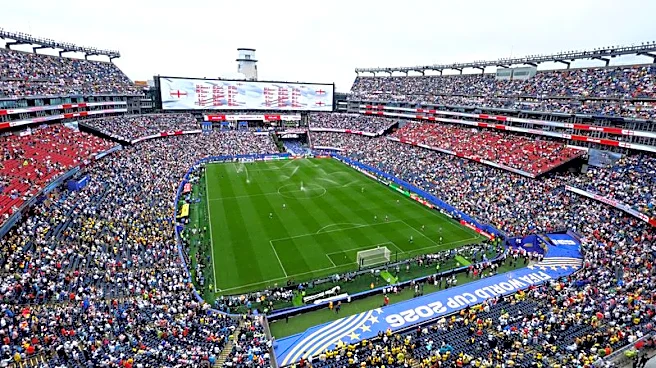
price tag of a staggering $220 billion. While much of that was for broader infrastructure, even the eight stadiums cost around $8 billion to $10 billion. Before that, Brazil’s 2014 tournament cost an estimated $11.5 billion to $15 billion, and Russia’s 2018 event was around $11.6 billion. These costs cover three main areas: state-of-the-art stadiums that meet FIFA’s exacting standards, massive infrastructure upgrades (airports, subways, hotels), and a security operation fit for a global event. For host cities, these taxpayer-funded expenses can be immense, with cities for the 2026 World Cup in North America facing estimated costs of $100–$200 million each just for services like traffic management and security.
The Promised Payoff: Tourism, Jobs, and Global Prestige
So why would any country sign up for such a bill? The sales pitch is intoxicating. Promoters and FIFA project massive economic windfalls. For the 2026 World Cup, one study projects a potential GDP boost of over $40 billion across North America, with individual host cities seeing up to $620 million in economic activity. The logic seems simple: millions of high-spending tourists will flood in, filling hotels and restaurants. This creates a short-term boom in jobs in hospitality, construction, and services. Beyond the immediate cash injection, there's the invaluable “soft power” of being in the global spotlight. Hosting is a chance to rebrand a nation, showcase its capabilities, and attract future investment and tourism for years to come. There’s also what economists call “psychic income”—the undeniable pride and excitement a country feels from hosting.
The Catch: Why the Math Rarely Adds Up
Here's the problem: economists are often skeptical of those rosy projections, arguing they overstate benefits and understate costs. One major issue is that much of the revenue generated flows directly to FIFA, which controls the most lucrative streams like broadcasting rights and corporate sponsorships. For its 2019–22 cycle, which included the Qatar World Cup, FIFA pulled in a record $7.57 billion in revenue. Host cities, meanwhile, are left paying for security and public services, and often receive little of the direct game-day revenue. Furthermore, economic impact studies often fail to account for the “substitution effect.” Money spent by locals on the World Cup is money not spent on other local businesses. Likewise, World Cup tourists often displace regular tourists who are scared off by crowds and high prices. The promised jobs are often temporary, disappearing once the tournament ends.
The White Elephant in the Room
Perhaps the most visible symbol of this financial gamble is the “white elephant” stadium. Host nations, particularly those without a robust domestic league, often build massive, expensive arenas that have little purpose after the tournament. Brazil’s 2014 World Cup is a cautionary tale. The Arena da Amazônia, built in the middle of the rainforest for around $270 million, now sits mostly unused, sometimes hosting weddings or small local matches with crowds of less than 1,000 in a 44,300-seat venue. The stadium in Brasília, one of the most expensive ever built, became a bus parking lot. Even Qatar, which innovated with a temporary stadium made of shipping containers, has struggled. The plan to dismantle and ship Stadium 974 to Uruguay fell through, and it has remained largely unused. These structures are not just monuments to questionable planning; they are a continuous drain, with maintenance costs running into millions annually.