






The Challenge of Revisiting Perfection
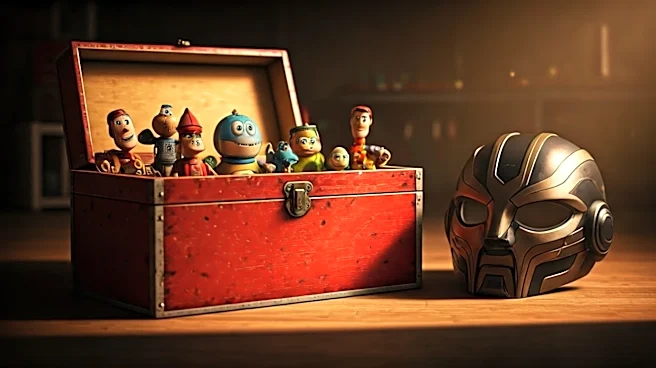
In the world of filmmaking, there are good endings, great endings, and then there’s the end of *Toy Story 3*. Andy, now a college-bound young man, passing his cherished toys to a new child, Bonnie, was more than a conclusion; it was a generational rite
of passage. It was perfect. The story of loyalty, loss, and growing up was complete. Then came *Toy Story 4*, a commercially successful but divisive epilogue that gave Woody a different kind of closure. Now, with *Toy Story 5* confirmed, Pixar is intentionally reopening a story many feel has already been told twice over. This isn't new territory for the studio. In 2004, *The Incredibles* delivered a nearly flawless, self-contained superhero story about family, identity, and mid-life crisis. For 14 years, it stood alone as a masterpiece. The demand for a sequel was deafening, but when it finally arrived, it provided a valuable, if slightly disappointing, lesson about the perils of going back to the well.
The Incredibles 2 Playbook: Success and Safety
*Incredibles 2* was a box office juggernaut, shattering records and delighting audiences with its stunning animation and the scene-stealing antics of baby Jack-Jack. By every commercial metric, it was a home run. Yet, critically and among many long-time fans, a consensus emerged: it was good, but it was safe. The sequel’s plot largely mirrored the first film’s structure, only swapping the leads. This time, it was Helen/Elastigirl who got the super-suit and the thrilling missions, while Bob/Mr. Incredible was left at home to wrestle with domestic chaos and feelings of inadequacy. It was a clever flip, but a flip nonetheless. The film revisited the same themes—the public perception of supers, the strain of balancing work and family—without significantly advancing them. It felt less like a sequel and more like a remix, a testament to the immense pressure of living up to a beloved original. It proved you can make over a billion dollars without truly pushing your characters forward.
Why Toy Story 5's Problem Is Different
If *Incredibles 2* offers a cautionary tale, *Toy Story 5* faces a steeper climb for a simple reason: the emotional arc is already exhausted. Woody’s journey from Andy's favorite to a leader of a lost tribe of toys, and finally to a free agent finding his own purpose, is one of the most complete character arcs in modern cinema. Bringing him back from his quiet life with Bo Peep to rejoin Buzz and the gang risks invalidating the emotional weight of *Toy Story 4*'s ending. Whereas *Incredibles 2* could get by on simply giving us more of the same family dynamic, *Toy Story 5* must actively justify undoing a conclusion that was already a postscript to a perfect trilogy. The stakes are higher because the story isn't about a family unit that can be infinitely remixed; it’s about a single character's life cycle. Woody has already grappled with obsolescence, jealousy, loyalty, loss, and finding a new purpose. Any new conflict risks feeling like a retread, not an evolution.
The Search for a New 'Why'
So what happens when a perfect family brand is revisited? *The Incredibles 2* suggests you get a massively profitable, beautifully crafted film that leaves you feeling like you just ate a delicious, but familiar, meal. It satisfies the craving but doesn't create a new one. The challenge for *Toy Story 5* is to avoid this trap. Can it find a new 'why'? Perhaps the story won't be about Woody at all, but a passing of the torch to Jesse, Buzz, or a new toy entirely. Perhaps it’s a prequel, though that carries its own set of risks. The most dangerous path is the one of pure nostalgia—a forced reunion that relies on our affection for the characters to paper over a lack of narrative necessity. The best-case scenario is that Pixar has found a genuinely new, surprising angle that honors the past without being beholden to it. The worst-case scenario is that *Toy Story* becomes an animated *Fast & Furious*, a series where 'family' is invoked to justify an endless string of commercially driven adventures long after the original emotional engine has sputtered out.