




The Blank Canvas vs. The Design Failure
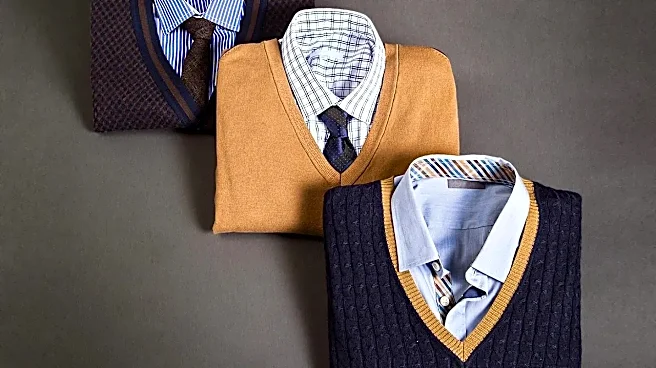
For one camp of designers, the pullover—especially the classic crewneck—is the ultimate expression of minimalist elegance. It's a blank canvas, a perfect, unassuming backdrop that allows other elements of an outfit to shine. This school of thought champions
the pullover as a triumph of function and timelessness. It’s seen as a humble, democratic garment that has been a wardrobe staple for centuries for a reason. In this view, a well-made pullover doesn't shout; it communicates confidence through restraint. It's the physical embodiment of the "less is more" philosophy, focusing on silhouette, material, and fit without the need for loud embellishment. The opposing camp, however, views this simplicity as a cop-out. To these designers, a basic pullover can be creatively lazy—a shapeless garment that hides the body and avoids the challenges of tailoring and innovative construction. They argue that fashion should be expressive and push boundaries, something a plain sweater rarely does. In a world of maximalist expression, with its bold patterns and layered textures, the simple pullover can feel like a design surrender.
A Question of Form and Function
The disagreement also hinges on the fundamental purpose of clothing. The pullover’s origins are rooted in pure utility—fishermen and laborers needed warm, durable garments they could pull over their heads without fuss. Proponents argue that the modern pullover continues this legacy, offering unparalleled comfort and practicality. It's a garment designed for living, not just for being looked at. Critics, however, argue that great design must transcend mere function to become art. While a sweater should be warm, it should also be interesting. They point to designers who use knitwear as a medium for complex textures, avant-garde shapes, and intricate patterns, arguing that settling for a plain pullover ignores the creative potential of the garment. For them, a great design should solve the problem of function while also creating an emotional or aesthetic reaction, a test they feel the basic pullover often fails.
The Great Material Divide
Often, the debate isn't about the pullover as a concept but about its execution. Both sides might agree that a cheap, pilling, poorly fitting acrylic sweater is a fashion tragedy. The disagreement sharpens when quality enters the picture. A designer who scoffs at a mass-market pullover might sing the praises of one rendered in heavyweight cashmere or ultra-soft Pima cotton, with a perfect fit and subtle, thoughtful details. For minimalism-inclined designers, a high-quality material is the entire point; the luxury is felt, not seen. The material becomes the design. Conversely, a maximalist designer might argue that even the most luxurious fabric can't save a boring silhouette. They believe a garment's design should be apparent in its structure, pattern, and overall statement, not just its material composition.
Minimalism vs. Maximalism in a Nutshell
Ultimately, the pullover debate is a proxy war for one of fashion’s most enduring tensions: minimalism versus maximalism. Minimalist design philosophy prizes clean lines, neutral palettes, and timelessness—all qualities embodied by the classic pullover. It’s about stripping away the non-essential to arrive at a pure, functional form. Maximalism, in contrast, is about expression, layering, vibrant color, and bold personality. It believes that more can be more. A designer’s stance on the pullover often reveals their core aesthetic philosophy. Do they believe true style is about creating a quiet, confident foundation, or is it about making a bold, artistic statement? The pullover sits directly at this crossroads, making it both a wardrobe staple and a battleground for design ideals.