








The Wide World of Soccer
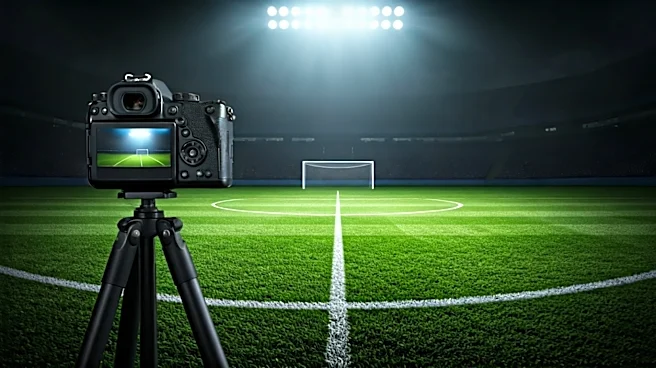
The default view for most global soccer broadcasts is a high, wide-angle shot from the main stand, often called the ‘tactical camera.’ It follows the ball from side to side, keeping about a third of the field in frame at all times. For viewers accustomed
to the frenetic, zoom-heavy presentation of American sports, this can feel slow, distant, or even boring. You can’t always see the grimace on a player’s face or the spin on the ball. But this perspective isn’t a mistake; it’s a deliberate choice rooted in the nature of the sport itself. Soccer is a game of space. The most important action is often happening away from the ball—a winger making a run, a defender stepping up to close a lane, or a midfielder finding a pocket of open grass. The wide angle is the only way to see these relationships, to understand the team’s shape, and to appreciate the geometric chess match unfolding on the pitch.
America’s Love of the Close-Up
Now, think about how you watch an NFL game. The broadcast cuts aggressively from a wide shot of the formation to a tight view of the quarterback’s eyes, then to the violent collision at the line of scrimmage. In basketball, the camera isolates the one-on-one matchup, focusing on the dribbler’s footwork or the defender’s stance. American sports broadcasting is built around creating heroes and villains, isolating individual efforts, and emphasizing moments of explosive, physical contact. It’s a narrative technique designed for sports where the action is concentrated in one specific area. An NFL play happens at the line; an NBA possession is dictated by the ball-handler. The broadcast language reflects this, using quick cuts and tight zooms to manufacture drama and highlight individual athleticism. It tells you exactly where to look and what matters most in that split second.
Space vs. Impact
This is the fundamental tension. The traditional soccer broadcast prioritizes the collective over the individual and space over the ball. It trusts the viewer to read the game and find the story themselves. The American broadcast style acts as a much more assertive narrator, directing your attention to moments of peak impact. When an American fan, raised on the language of the NFL, watches a soccer match filmed in the traditional European style, there can be a perceptual mismatch. They are waiting for the camera to tell them who the hero is, where the critical confrontation is happening. Instead, they get a wide, panoramic view that demands a different kind of attention—one that reads patterns and anticipates movement. It can make the game feel less about dramatic moments and more like a continuous, flowing system, which can be a difficult adjustment.
How U.S. Broadcasts Are Blurring the Lines
Sensing this cultural gap, U.S. broadcasters are increasingly experimenting with a hybrid style. You’ll now see far more ‘Skycam’ or ‘Spidercam’ views in major soccer tournaments, offering a top-down, video-game-like perspective that’s popular with NFL fans for watching plays develop. Broadcasters like Apple TV for its MLS Season Pass and Fox for the World Cup are using more frequent replays, super-slow-motion shots of tackles, and tight close-ups on star players. They are trying to inject some of that classic American sports-narrative DNA into the global game. While some purists argue this can distract from the tactical flow, it’s also an acknowledgment that there’s more than one way to present the sport. It’s an attempt to speak two visual languages at once—appealing to the seasoned fan who wants to see the formation and the new fan who wants to see the star player’s skill up close.