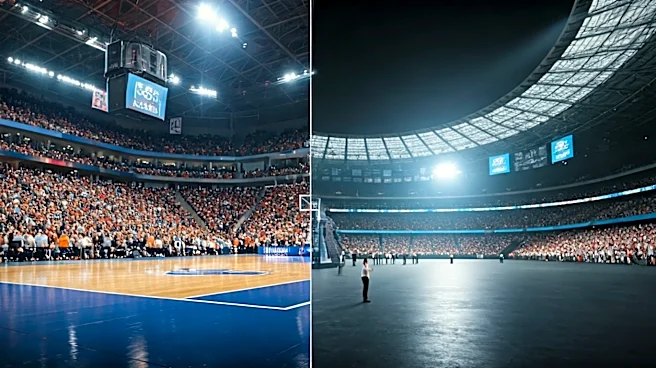









The Anatomy of a True Home-Court Edge
In the NBA, home-court advantage is more than just a statistical curiosity; it's a tangible weapon. It’s the deafening roar inside Golden State’s old Oracle Arena, a place opponents swore had acoustics designed by a sound engineer with a grudge against
silence. It’s the ghosts of championships past swirling in the rafters of the Boston Garden. But the advantage goes deeper than noise. It’s the comfort of sleeping in your own bed, the familiarity with the rims and the dead spots on the floor, and the subtle, subconscious influence a unified crowd can have on officiating. A 2011 Harvard study even noted that home teams in sports with subjective officiating, like basketball, get a measurable bump from crowd noise influencing calls. The energy is intimate, personal, and built over a long, 82-game season. A team isn't just representing a city; they *are* the city for those 48 minutes, and the crowd acts as a collective immune system, attacking the invading opponent with coordinated chants and boos.
When the Home Crowd Is an Entire Country
Now, scale that up. Instead of 20,000 screaming fans in an arena, imagine 200 million people watching from their living rooms, pubs, and town squares. That’s host-nation pressure. It’s what the Brazilian men’s soccer team faced during the 2014 World Cup. The expectation wasn't just to win; it was to heal a nation's soul, to perform a specific brand of beautiful football, and to do it all on the world's biggest stage. The pressure became a suffocating force. Every misplaced pass was a national tragedy, every goal conceded a collective trauma. The team famously wept during the national anthem before a match, overwhelmed by the emotional weight. Ultimately, it crushed them in a historic 7-1 semifinal loss to Germany. Unlike the focused anger of an NBA crowd, host-nation pressure is a diffuse, ambient anxiety. It’s the weight of history, politics, and national identity being projected onto a group of athletes. Success means a national holiday; failure feels like a national referendum on the country itself.
Shared DNA: The Psychology of 'Us vs. Them'
At their core, both phenomena are powered by the same psychological engine: in-group loyalty. Whether it’s a city or a country, the home crowd creates a powerful “us vs. them” dynamic that alters player perception and performance. For the home team, the crowd's energy can trigger a surge of adrenaline and a feeling of empowerment. Players often speak of feeding off the crowd, drawing strength from the collective will to win. This is the positive side of the coin. For the visiting team, that same energy is a hostile, draining force. It creates communication breakdowns, heightens anxiety, and can make every mistake feel magnified. In both scenarios, the crowd ceases to be a passive audience and becomes an active participant in the contest—a non-playing member of the home team whose primary job is to create a psychologically inhospitable environment for the outsiders.
Key Differences: Intimacy vs. Immensity
The crucial distinction lies in the nature of the relationship between the fans and the team. An NBA fan's connection is built through the intimacy of a long season. They know the players' tendencies, the coach's rotations, and the team's specific rivalries. Their support is knowledgeable and specific. A fan in Oklahoma City doesn’t just want to win; they want to beat the Warriors. Host-nation fandom, by contrast, is often immense but less personal. Millions of casual observers tune in, united by patriotism rather than a deep knowledge of the sport or the players. The expectation is broader and more abstract: “Win for America.” This can lead to a less forgiving atmosphere. While a home NBA crowd might rally a struggling star, a national audience can turn quickly, its love conditional on embodying national pride. The pressure is less about the game and more about the flag.