




Recalibrating What ‘Great’ Looks Like
In the age of social media clips and top-10 countdowns, our perception of goalkeeping excellence has been warped. We celebrate the spectacular, the reactive, the last-ditch. A keeper who makes eight saves, three of them world-class, is often hailed as the man
of the match, even if his team loses 3-2. We laud the firefighter who bravely battles a raging inferno. But we rarely praise the fire inspector whose meticulous work prevented the blaze from ever starting. This is the paradox of the elite modern goalkeeper. Their best work is often invisible. It’s the slight shuffle to the left that cuts down an angle, the shouted instruction that organizes a defensive wall, the decision to rush 15 yards off their line to clear a ball before a striker can even dream of a one-on-one. A quiet game for a keeper, with zero or one save to their name, isn't necessarily a sign they had nothing to do. It’s often evidence they did everything right before the moment of crisis arrived.
The Organizer-in-Chief
Watch a top-level goalkeeper during a set piece. They aren't passively waiting for the ball to be delivered. They are the loudest, most commanding player on the field—a general organizing their troops. They are pointing, screaming, and physically positioning defenders to cover the near post, mark the biggest aerial threat, and block potential runs. Every instruction is a preventative measure. A well-organized wall might cause a free-kick taker to blast the ball into a defender’s shins. A defender moved two feet to the left might be perfectly placed to head away a dangerous cross. None of this action appears on a stat sheet. There is no metric for “Defensive Breakdowns Prevented by Shouting.” Yet, this communication is arguably more important than raw shot-stopping ability. It creates an environment of defensive security and collective responsibility. The keeper’s job isn’t just to guard the 192 square feet of the goal; it’s to manage the entire defensive third of the field. A silent, stationary goalkeeper invites chaos. A vocal, commanding one imposes order.
The Sweeper and The Cross-Claimer
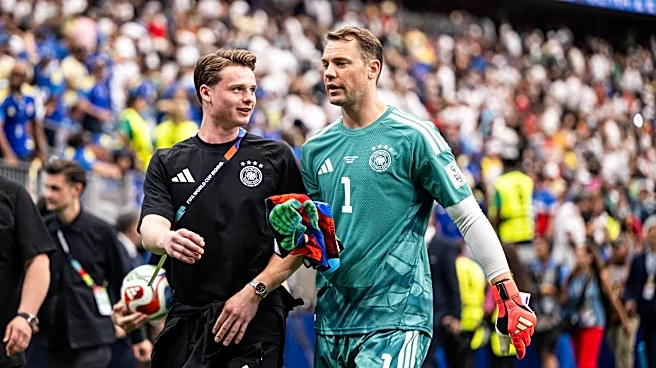
Two of the most decisive actions a keeper can take involve preventing a shot before it’s even a possibility. The first is the role of the “sweeper-keeper,” popularized by modern legends like Germany's Manuel Neuer. When the opposition plays a long ball over the top of the defense, the sweeper-keeper’s job is to read the play and race off their line to clear the danger before the striker arrives. It’s a high-risk, high-reward action that requires immense bravery, speed, and game intelligence. A successful sweep is a routine clearance; a mistimed one is a red card or an empty-net goal. The best make it look boringly effective. The second is commanding the penalty area on crosses. A keeper who stays glued to their goal line forces their defenders to deal with every high ball pumped into the box—a recipe for panic and ricochets. But the keeper who confidently comes out to catch or punch a cross relieves all pressure. That single action—plucking the ball out of the air above a crowd of bodies—is a defensive reset button. It ends the opposition’s attack instantly and often allows the keeper to start a quick counter-attack with a powerful throw or kick.
Mastering Geometry and Psychology
The most subtle art of goalkeeping is positioning. The best goalkeepers make hard saves look easy. Why? Because their starting position was so perfect that the shot was hit almost directly at them. They don’t need to launch into a full-stretch dive because their footwork and reading of the play put them in the optimal spot to begin with. They understand the geometry of the goal, constantly adjusting their position relative to the ball to make the target as small as possible for the shooter. This has a profound psychological effect. A striker who sees a keeper perfectly positioned, looking big and confident, may hesitate. They might try to be too precise and miss the target entirely, or they might rush their shot and make it easy for the keeper. The quiet masterclass is about making the opponent play the game on your terms. The keeper’s presence alone becomes a defensive weapon, turning high-percentage chances into hopeful efforts.