


Our Obsession with Battlefield Epics
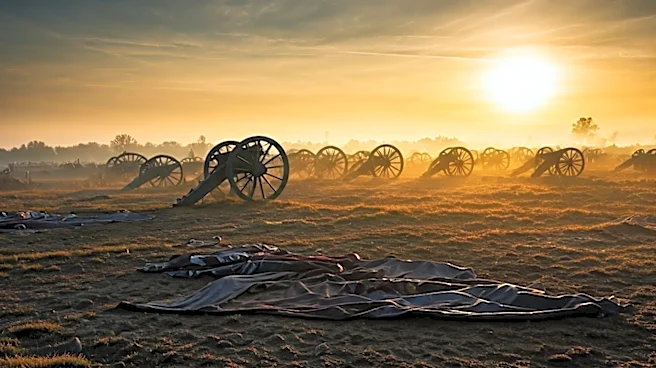
Hollywood loves a good war story. When it comes to the American Revolution, our cultural memory is crowded with images of George Washington crossing the Delaware, muskets firing at Yorktown, and heroic minutemen facing down Redcoats. These are powerful,
cinematic moments that celebrate courage and sacrifice. Yet, they represent only one part of the story, and arguably not the most fundamental one. The revolution wasn't just won with bullets and bayonets; it was first won with words, arguments, and ideas. A war of independence had to first be a war of imagination. Before a single shot was fired, colonists had to be convinced that a different future was not only possible, but necessary. Focusing solely on the battlefield reduces the revolution to a military conflict, when it was primarily an intellectual and social one.
The Real Engine of Revolution
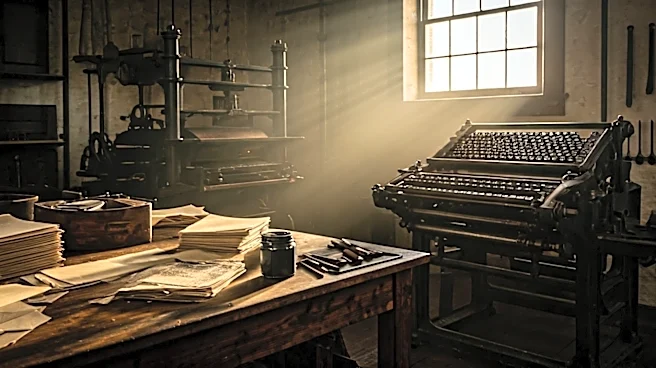
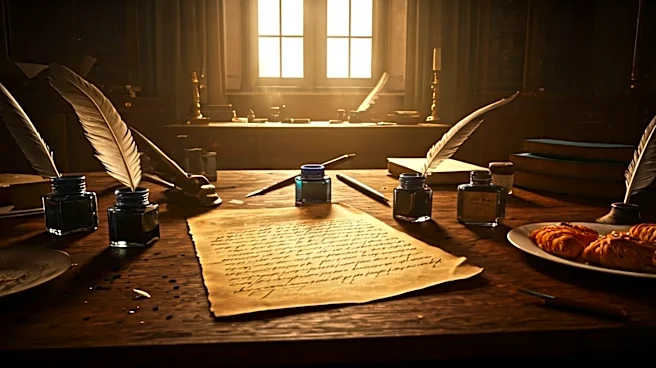
The true engine room of American independence was the colonial print shop. Far from being dusty, quiet workshops, these places were the social and political hubs of their day—a chaotic mix of post office, coffee shop, and public forum. According to historian David Ramsay, the "pen and press had merit equal to that of the sword." Printers didn't just set type; they curated the flow of information that bound the thirteen disparate colonies together. Pamphlets, newspapers, and broadsides were the viral media of the 18th century. A fiery essay printed in Boston could be debated in a Philadelphia tavern days later, thanks to an exchange system that functioned like a modern news wire. It was in these shops that abstract grievances against the Crown were transformed into a shared, urgent cause.
A Hero in an Apron, Not Armor
Our ideal protagonist, then, isn't a soldier, but a printer. And there’s no better archetype than Benjamin Franklin. Long before he was a world-famous diplomat and Founding Father, Franklin identified himself simply as a printer. His journey from a teenage apprentice writing popular essays under a pseudonym to a media mogul who established a network of print shops along the coast is a quintessentially American story of ambition and influence. A film that opens on a young Franklin—clever, ambitious, and covered in ink—would reveal the true source of his power. It was through his press that he shaped public opinion, promoted civic projects like libraries and hospitals, and argued for the economic necessity of paper currency. His story demonstrates that influence is built not just through political power, but through the patient, daily work of communication and persuasion.
The Pamphlet That Sparked a Nation
No story about the power of the press would be complete without Thomas Paine's "Common Sense." Published anonymously in January 1776, this 47-page pamphlet argued for independence in plain, electrifying language that anyone could understand. At a time when many colonists were still wavering, Paine’s words cut through the noise, selling an estimated 120,000 copies in three months and convincing countless readers that breaking from an island 3,000 miles away was not just a right, but simple common sense. A biopic focused on the print shop could capture the frantic, clandestine energy of producing and distributing such a revolutionary document—a piece of writing so powerful it fundamentally shifted public consciousness and set the stage for the Declaration of Independence.
A More Honest Story for Today
As America plans its semiquincentennial celebrations, a narrative centered on the messy, powerful, and world-changing force of the free press feels more urgent than ever. We live in an age defined by debates over information, truth, and how ideas shape society. A story about printers—tradesmen who used technology to challenge an empire, build consensus from chaos, and articulate a new vision for humanity—is not just a history lesson. It’s a reflection of our own struggles and a reminder that the contest of ideas is the bedrock of American democracy. This is the story that can inspire a new generation to value the hard work of civic engagement and the courage it takes to speak truth to power.