








A Building With Character
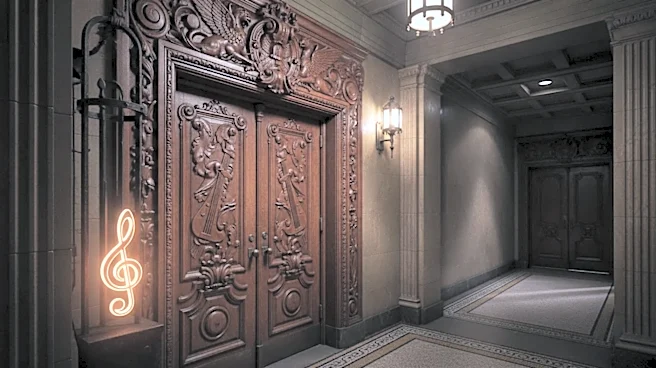
From the very first episode, the Arconia asserted itself as the fourth lead of the show, alongside the unlikely trio of Charles, Oliver, and Mabel. It’s a classic Upper West Side pre-war building, complete with the requisite architectural grandeur and a dense
history of residents who never truly seem to leave. The show’s creators, Steve Martin and John Hoffman, understood that for the central mystery to work, the building couldn't just be a backdrop; it had to feel like a living, breathing entity, a vessel holding a century of secrets. While the lavish set design and winding narrative establish this character, the masterstroke that truly gives the Arconia its soul is found not in what we see, but in what we hear.
The Sound of Mystery and Melancholy
Enter Siddhartha Khosla, the Emmy-nominated composer tasked with scoring a show that constantly pirouettes between screwball comedy, gripping mystery, and poignant character drama. Khosla’s challenge was to create a sound that felt both classic and contemporary, mirroring the Arconia itself. He decided early on to treat the building as a primary character, composing music that gives a sense of its majesty, history, and the loneliness of its inhabitants. The score leans into this emotional subtext rather than simply scoring the comedy, giving the series its surprising depth. Khosla approaches the show like a character-driven drama, focusing on the core feeling of lonely people finding connection.
The Main Title's Secret
The key motif is hidden in plain sight: the main title theme. It’s a deceptively jaunty, instantly memorable tune that perfectly captures the show’s quirky energy. Khosla revealed that the piece was one of the first he wrote, and upon hearing it, showrunner John Hoffman immediately knew it was the theme. Khosla describes it as a melody with bouncy chords that made Hoffman feel "mystery, drama, lonely and happy" all at once. What makes it so effective as the Arconia’s voice is its malleability. The melody is so strong that it can be re-contextualized for almost any mood—romantic, sad, or tense—without losing its identity. This theme, in its various forms, becomes the building's recurring thought, its hum in the hallways.
How the Walls Begin to Talk
This central theme is the sound of the Arconia listening back. When a variation of it plays over a quiet, character-focused moment, it’s as if the building itself is commenting on the action, sharing in the melancholy of its residents. When it becomes more percussive and suspenseful, the walls feel like they’re closing in, participating in the mystery. Khosla describes his intention was for the score to sound like it’s coming from within the inner walls of the Arconia. This is achieved through clever instrumentation and variations. Sometimes it's a haunting piano, other times it's carried by a full orchestra, or even a quirky bassoon—an instrument Khosla used instinctually before knowing a bassoonist would be central to the Season 1 plot. These different textures give the building a range of expressions, from a knowing sigh to a startled gasp. This isn't just background music; it's the building's own internal monologue made audible, confirming for the audience that within these walls, someone—or something—is always listening.