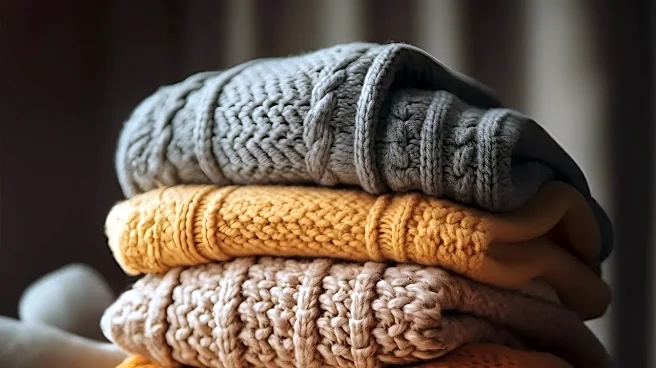







First, What Are We Calling a 'Spot'?
You won't find 'spot quality' in a textile dictionary. The term is industry shorthand for the deliberate or accidental textures you see in wool yarn. These are primarily 'neps' and 'slubs.' Neps are tiny, dense knots of fiber that can look like flecks
or specks. Slubs are thicker, lumpier sections that give the yarn an uneven profile. While many high-end processes work to eliminate these for a perfectly smooth finish, some styles, like the iconic Donegal tweed, are defined by them. Donegal wool is intentionally spun with colorful neps, creating its signature rustic, flecked appearance. The disagreement among designers isn't about a universal flaw; it's a philosophical divide on whether these spots are a bug or a feature.
The Purist's Argument: In Pursuit of Perfection
One school of thought, rooted in traditional luxury, argues that the finest wool garment is a testament to uniformity. For these designers, a perfectly smooth, consistent yarn is the ultimate goal. In this view, any unplanned nep or slub is a sign of a shortcut in production. True quality, they contend, is found in wool with a high micron count for softness and long staple fibers that can be spun into a strong, even yarn less prone to breaking. Processes like combing are specifically used to remove short fibers and neps, resulting in a sleek material like fine merino. For a purist, a sweater's surface should be flawless, and any visible 'spot' is simply a defect that detracts from its clean, polished aesthetic.
The Artisan's View: A Case for Character
On the other side of the aisle are designers who champion texture and character. They argue that in a world of mass-produced uniformity, the slight irregularities in a natural fiber are what give a garment soul. For this camp, neps and slubs aren't flaws but marks of authenticity. They see beauty in the imperfection, a visual reminder that the sweater was made from a natural, variable material. This philosophy celebrates the rustic charm of wools like Shetland or the aforementioned Donegal, where the 'spots' are an integral part of the story. It’s a preference for a wabi-sabi approach, where the yarn’s unique texture adds depth and a tactile dimension that a perfectly smooth surface lacks.
The Real Tell: Intentional Texture vs. Poor Construction
So, who is right? In a way, both are. The true indicator of quality isn't the presence of spots, but their origin. The disagreement melts away when you learn to distinguish between intentional texture and poor craftsmanship. A high-quality Donegal sweater uses strong, long fibers to create a yarn where colorful neps are deliberately and evenly distributed. In contrast, a low-quality sweater may have spots because it was made from cheap, short fibers that broke during the spinning process, creating random, weak points and knots. Therefore, a 'spotty' sweater can be a premium, artisan product or a poorly made item about to pill and fall apart. The secret is in the integrity of the yarn itself, not just the texture you see on the surface.
How to Be Your Own Expert in the Store
Navigating this debate as a shopper comes down to context and a few sensory checks. First, consider the style. A sleek, fine-gauge merino turtleneck should be smooth; that’s its purpose. A rugged, chunky-knit crewneck can, and perhaps should, have some rustic texture. Next, look closely at the yarn. Do the flecks and slubs look like a consistent, deliberate part of the design, or do they look like random mistakes and fuzzy patches? Then, do a stretch test: gently pull a section of the knit and see if it springs back smartly. A quality knit has good elasticity and won't feel limp. Finally, trust your hand. Regardless of texture, a good wool sweater should feel substantial for its weight and not overly scratchy, which can indicate coarse, lower-quality fibers.