




The New American Gothic
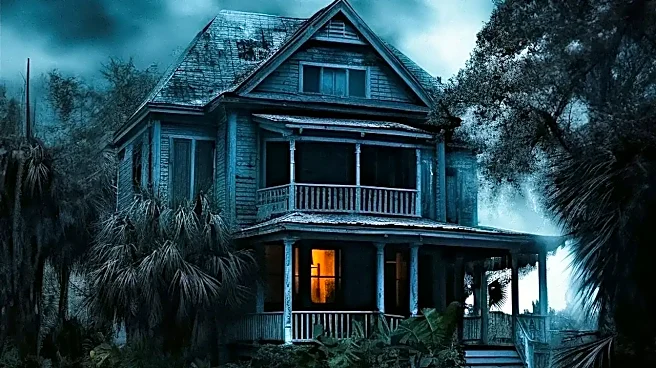
The small, forgotten town has always been a cornerstone of American horror. It’s the setting for countless paperbacks and B-movies where a single evil—a clown, a vampire, a masked killer—terrorizes an otherwise peaceful community. But the new breed of small-town
horror hitting our screens aims for something deeper. It’s less about an external monster and more about the decay from within. Think less slasher, more slow-burn psychological thriller. This emerging genre, a sort of New American Gothic, finds its horror in shared trauma, buried secrets, and the terrifying idea that the community itself is the real monster. It’s a tradition with roots in foundational shows like 'Twin Peaks,' which proved that the mystery of a place could be just as compelling as the crime committed there. This fall’s slate suggests that legacy is alive and well.
Meet the New Neighbors
Several upcoming and recent series exemplify this shift. Look at Apple TV's 'Widow's Bay,' a 2026 horror-drama starring Matthew Rhys as the mayor of a cursed and isolated New England island. While it has supernatural elements, the core conflict revolves around a town's struggle against its own history and superstitions. Similarly, MGM+'s 'From' traps its unwilling residents in a nightmarish town plagued by terrifying creatures, but the real drama comes from their attempts to build a society while battling paranoia and despair. Peacock's 'Crystal Lake,' which delves into the backstory of Pam Voorhees, promises to turn a classic slasher villain into a complex character study rooted in small-town dynamics. These shows aren't just about scares; they're about place, people, and the rot that sets in when both are left to fester.
From B-Movie to A-List
So, what elevates these stories to "prestige" status? For starters, the resources. Prestige television is defined by high production values, cinematic craft, and a focus on legacy over simple entertainment. Streamers and networks are pouring money and A-list talent into projects that would have once been relegated to the genre aisle. Getting an actor like Matthew Rhys ('The Americans') for 'Widow's Bay' or Evan Peters for a body-horror series like 'The Beauty' signals an ambition beyond cheap thrills. Furthermore, the storytelling itself has changed. Prestige shows favor novelistic, season-long arcs over monster-of-the-week episodes. They allow characters to evolve and stories to breathe, creating a narrative depth that rewards viewer investment. It’s the HBO-ification of Stephen King: the budgets are bigger, the themes are heavier, and the goal is to create conversations, not just nightmares.
An Anxiety We Can All Watch
The rise of prestige small-town horror isn't happening in a vacuum. It speaks to a collective cultural anxiety. In an era of social fragmentation and deep-seated mistrust, the image of a community turning on itself feels disturbingly resonant. These shows use the isolated town as a microcosm to explore broader fears: What happens when our neighbors are no longer trustworthy? What dark history are our foundations built upon? The horror is effective because it’s not entirely fantastic; it's a heightened version of anxieties we already feel. By framing these fears within a compelling, high-quality narrative, these series provide a space to process that unease. They suggest that sometimes the most terrifying monsters are the ones we create ourselves, hiding in plain sight in the places we call home.