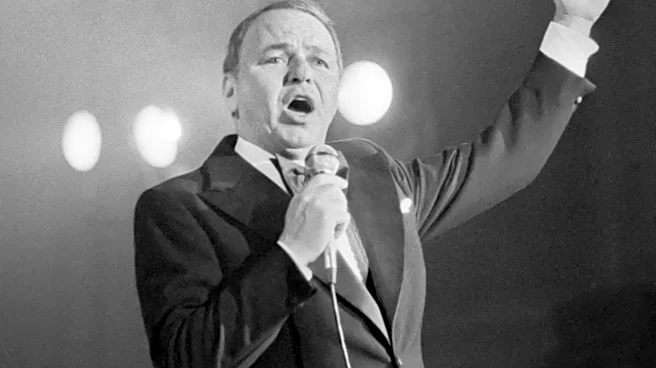









An Artist in Search of a New Sound
By the late 1960s, Frank Sinatra was a living legend, but the musical landscape was shifting beneath his feet. The rise of psychedelic rock and folk had made many of his contemporaries seem like relics. Never one to be left behind, Sinatra was looking
for something different, a project that was ambitious and contemporary. He had already pioneered the concept album with classics like "In the Wee Small Hours," but he wanted to push the boundaries further. His own label, Reprise Records—which he founded for the explicit purpose of creative freedom—was successful, but even his own executives were getting nervous about his next move.
The Unlikely Choice from The Four Seasons
The project that caught Sinatra's ear was a complete left turn. It was a fully-formed concept album penned by Bob Gaudio, the musical mastermind behind the massive pop hits of The Four Seasons, and lyricist Jake Holmes. Gaudio wasn't a traditional choice for a Sinatra record. He was a rock and roll guy, known for chart-toppers like "Sherry" and "Big Girls Don't Cry." The album he and Holmes conceived, titled "Watertown," was a somber, narrative-driven story about a small-town man whose wife leaves him and their children for the big city. It was a baroque pop story told through a series of soliloquies, a far cry from the swinging bravado or grand orchestral ballads fans expected.
The Label's Pushback
When Sinatra decided he wanted to record "Watertown" with Gaudio producing, executives at Reprise were reportedly skeptical. This wasn't the Sinatra they knew how to sell. The album's sound was more aligned with the melancholic, layered pop of Brian Wilson or the burgeoning singer-songwriter movement than with the catalogs of Nelson Riddle or Gordon Jenkins. The label brass pushed for a safer, more conventional approach, wary of the commercial risk. Gaudio was an outsider, and the project's bleak, intimate storyline was a world away from the confident swagger of "My Way," which had been a recent hit. The pressure was on to replace Gaudio with a more established Sinatra collaborator.
Sinatra's Final Word
But Frank Sinatra's belief in the project was absolute. He had founded Reprise to make exactly these kinds of artistic choices without boardroom interference. He loved the concept and the vulnerability in the story, which perhaps resonated with his own well-documented heartbreaks. Sinatra put his foot down, insisting that Gaudio was the man for the job. It was a remarkable show of trust, especially considering the recording process itself was unconventional for him. Instead of singing live with the orchestra, Sinatra recorded his vocals over pre-recorded tracks, a modern technique he embraced for the project. His decision was final: Gaudio would produce, and they would make the album his way.
A Masterpiece Ahead of Its Time
Upon its release in 1970, "Watertown" was a commercial failure. It became Sinatra's first major album to not even crack the top 100 on the Billboard charts, and critics were divided. The public, it seemed, wasn't ready for such a starkly different Sinatra. For a time, it looked like the label's fears had been justified. However, decades later, the album has been completely re-evaluated. Critics now hail "Watertown" as a forgotten masterpiece, a raw and courageous performance that showcases Sinatra's incredible depth as a dramatic interpreter of song. Its cult following has grown, and it's seen as one of his most ambitious artistic triumphs, proving that the Chairman's instincts were, as usual, spot on, even if the world needed a few decades to catch up.