





The Birth of Anarchy on King's Road
You can’t talk about punk and fashion without starting at 430 King’s Road in London. In the mid-1970s, this was the location of SEX, a boutique run by Vivienne Westwood and Malcolm McLaren. It wasn't just a store; it was the laboratory where the punk aesthetic
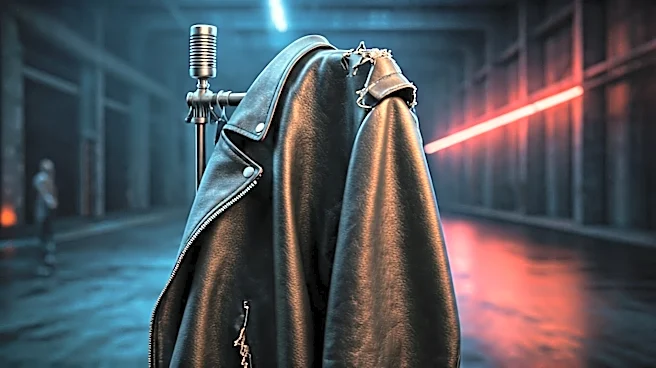
was forged. They dressed a then-unknown band called the Sex Pistols, and in doing so, created a uniform for a generation's discontent. The look was a deliberate two-fingers to the mainstream: bondage trousers, t-shirts with provocative graphics, leather jackets covered in studs and paint, and, of course, the humble safety pin, used to hold together ripped-up garments in a perfect symbol of DIY defiance. This wasn't fashion as aspiration; it was fashion as aggression, a visual language for social and political frustration.
Westwood Brings the Rebellion to the Runway
The ultimate irony began when punk's original architect, Vivienne Westwood, transitioned from shop owner to high-fashion designer. Her first catwalk show in 1981, titled "Pirate," marked the moment punk’s raw energy was formally introduced to the establishment it loathed. Throughout the '80s, Westwood took the foundational elements of punk—the tartan, the deconstruction, the historical references twisted into something new—and elevated them with couture techniques and intellectual rigor. She proved that punk wasn't just a fleeting youth-quake style; it was a deep well of ideas about rebellion, identity, and Britishness that could be endlessly reinterpreted. She didn't just copy the street; she intellectualized the snarl, turning attitude into artistry.
The '90s Avant-Garde Deconstruction
By the 1990s, a new generation of London designers picked up the punk torch, not by copying the look, but by embracing its spirit of deconstruction and provocation. The most notable was Alexander McQueen. His early shows were infamous for their raw, aggressive energy and confrontational themes. His 1995 "Highland Rape" collection, for example, used torn lace and slashed tartan to explore brutal historical narratives, not just to look rebellious. It was punk’s anger channeled through immaculate tailoring and profound storytelling. Similarly, John Galliano’s work from this era often featured a romanticized decay, with torn fabrics and exposed seams that owed a spiritual debt to punk’s DIY ethos, albeit filtered through a lens of historical fantasy.
From Anarchy to Aspiration
As the millennium turned, punk’s aesthetic became increasingly absorbed into the luxury mainstream. It was sanded down, polished, and made commercially palatable. At Burberry, a brand synonymous with British heritage, designers like Christopher Bailey began incorporating studded leather jackets, biker boots, and skinny trousers into collections. The once-threatening safety pin became a high-end brooch, and ripped denim was sold for hundreds of dollars. This was "punk-inspired" fashion—the look without the politics. It represented the final stage of co-option, where the symbols of rebellion were detached from their original meaning and transformed into marketable signifiers of edge and cool for a global luxury consumer.
The New Wave of DIY Rebels
Today, London Fashion Week’s most exciting punk energy comes from designers who channel the subculture's original spirit rather than its literal look. Artists like Charles Jeffrey LOVERBOY tap into punk’s club-kid roots, its queer identity, and its collaborative, chaotic energy. His collections are a riot of color, performance, and community, celebrating the outcasts and eccentrics in a way that feels authentically anti-establishment. Likewise, designers such as Matty Bovan and Dilara Fındıkoğlu use DIY techniques, deconstructed forms, and politically charged themes that resonate with the anger and creativity of 1970s punk, updated for a new generation grappling with its own anxieties. They prove that punk’s true legacy isn’t just in the clothes, but in the attitude.