






The Director’s Deception
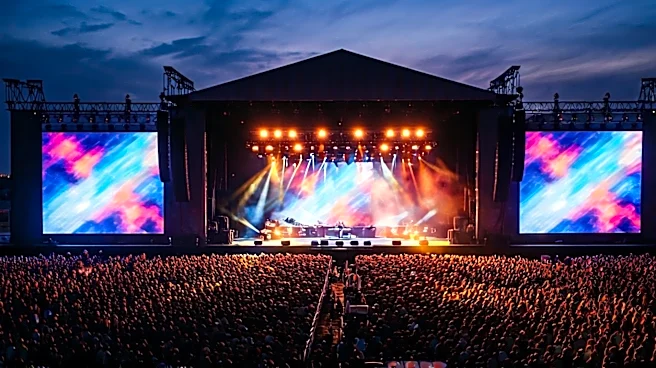
Watching CMA Fest from your couch is a fundamentally different experience than standing in the Tennessee heat at Nissan Stadium. It’s cleaner, shorter, and perfectly curated. The television broadcast isn't a simple recording; it’s a re-interpretation.
Every decision, from a slow-motion shot of a guitar solo to a quick cut to a fan singing along, is a deliberate choice made by a director and an army of editors. Their job isn't to document reality—it's to create compelling television. This crucial distinction means that the artist you see on TV might not be the same artist who was on stage. The broadcast creates a new performance, one designed for maximum emotional impact in a living room, not a stadium. For better or worse, the director’s choices become the viewer's reality, shaping opinions on everything from an artist’s energy to their connection with the crowd.
Creating False Intimacy and Energy
A stadium is a vast, impersonal space. An artist on stage is a tiny figure to those in the back rows. But on television, a well-timed close-up creates an illusion of intimacy that’s impossible to replicate live for 50,000 people. When the camera pushes in on Luke Combs’ face as he belts out a heartfelt chorus, you feel like he’s singing directly to you. This technique heavily favors artists who are emotive performers, making them seem more “authentic” or “connected.” Conversely, quick cuts, whip pans, and sweeping drone shots can inject artificial energy into a performance that might have felt more static in person. An artist who relies on subtle musicianship can be made to look boring, while a high-energy performer’s set can be amplified into a chaotic frenzy. The broadcast tempo isn't the artist's; it's the editor's.
The Power of the Reaction Shot
Perhaps no tool is more powerful—or more manipulative—than the crowd reaction shot. Did a new artist’s performance really land with the audience? The director can decide. By cutting to a cluster of fans screaming and singing along, the broadcast tells you, “This was a success.” By contrast, a lack of enthusiastic crowd shots (or, worse, a cut to someone checking their phone) can subtly signal that a performance fell flat. In reality, with thousands of people in attendance, a director can find any reaction they want. They can find the tearful fan during a ballad, the couple dancing during an upbeat number, or the group of friends raising their beers. These brief, curated moments are woven into the performance, becoming inseparable from our judgment of the artist. They provide social proof that validates or invalidates the performance on screen.
The Soundbite vs. The Setlist
CMA Fest spans four days and features hundreds of performances across multiple stages. The ABC special condenses all of that into a three-hour primetime event. This extreme compression has a profound impact. An artist might play a diverse, 45-minute set live, showing off their range with rockers, ballads, and deep cuts. On TV, you’ll probably see one song: their most recent radio hit. This editorial choice can flatten an artist's identity, reducing them to a single sound or theme. A versatile artist like Kelsea Ballerini or Lainey Wilson, who blends country with pop and rock elements, might have their entire broadcast presence defined by the one song that fits the show's desired narrative arc. Viewers who only know the artist from this single, decontextualized performance can form a completely skewed perception of their artistry and musical identity.