





The World Before the Story
Before Rodgers and Hammerstein changed the game with *Oklahoma!* in 1943, the American musical was a different beast. Shows were often loose collections of songs, gags, and dance numbers built around a star performer. The songs were hits, but they were often interchangeable.
You could pluck a tune from one show and drop it into another without the plot missing a beat. Consequently, the recordings of these shows were simply “songbooks.” On brittle, three-minute 78-rpm records, you’d get the show's most popular numbers, sung by the original stars if you were lucky, but with little sense of narrative or dramatic context. They were playlists, not stories.
The Rodgers and Hammerstein Revolution
Richard Rodgers and Oscar Hammerstein II pioneered the “integrated musical,” where every element—song, dialogue, dance, character—served a single, unified story. When Laurey sings “Oh, What a Beautiful Mornin’” in *Oklahoma!*, it’s not just a nice tune; it’s a foundational character and setting statement. When Billy Bigelow sings his “Soliloquy” in *Carousel*, it’s a seven-minute psychological journey of a man confronting impending fatherhood. The songs *were* the plot. This narrative-first approach made their shows profoundly cohesive and emotionally resonant on stage. But it also created a challenge for recording: how do you capture a story, not just a series of songs, on a record?
A Perfect Collision of Art and Tech
The answer arrived in 1948, just as R&H were dominating Broadway. Columbia Records introduced the 33 1/3-rpm long-playing record, or LP. This was the technological leap the integrated musical had been waiting for. Instead of three or four minutes, an LP could hold over 20 minutes of music per side. Suddenly, it was possible to present a show’s score in the order it was performed, preserving the dramatic flow and emotional arc Hammerstein had so carefully constructed. The 1949 original cast recording of *South Pacific*, produced by the visionary Goddard Lieberson, is widely considered the first blockbuster LP. It wasn't just a record; it was a complete theatrical experience that could be owned.
A Theater for the Mind
This is where the cast album began to capture something the stage couldn’t: permanence and intimacy. A live performance is ephemeral, a unique event shared by the people in the room that night. The cast album, however, was an idealized, permanent version of the show. Lieberson and his contemporaries didn't just set up microphones in the theater. They brought the cast into a recording studio and meticulously produced the album, re-staging the show for the listener's ear. They could control the sound, balance the orchestra and vocals perfectly, and create a pristine audio document. This wasn't a bootleg; it was a new work of art. The listener could hear every word, replay every complex harmony, and fall in love with the score in a private, focused setting, creating a deep, personal connection that even a seat in the orchestra pit couldn't guarantee.
The Album Became the Show
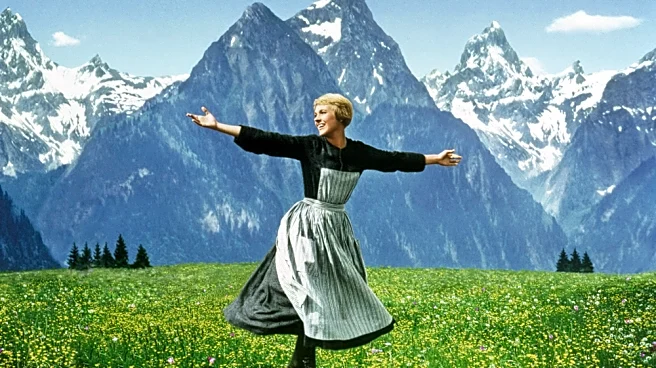
For the vast majority of Americans who lived far from New York City, the cast album *was* the show. *My Fair Lady* and *The Sound of Music* became national cultural events not just because they were Broadway hits, but because their cast albums topped the charts for months, even years. Families gathered around the hi-fi console, following along with the liner notes and photos, imagining the sets and choreography. The album broadcast the genius of Rodgers and Hammerstein to every corner of the country, embedding their work into the American consciousness. It preserved the score in its perfect form, allowing the story to live on long after the original cast had taken its final bow.