






1. The Star Power Scale
The most obvious tell is the cast. A-list celebrities command enormous salaries, which fall into the 'above-the-line' costs that can instantly inflate a budget into the tens or hundreds of millions. Holiday movies, especially those made for television,
often operate on a more modest scale, with budgets typically around $2 million. Instead of Hollywood heavyweights, they rely on a rotating cast of familiar, likable actors who are pros at delivering heartwarming performances but don't command blockbuster paychecks. If you recognize the lead from a dozen similar holiday films, it's a strong sign of a budget-conscious production.
2. The Location Shuffle
Pay close attention to where the story unfolds. Big-budget films often feature multiple, complex locations, sometimes spanning different cities or countries, which drives up costs significantly. Lower-budget holiday movies are masters of efficiency. Many are filmed in Canada due to tax incentives and an abundance of quaint towns that can stand in for idyllic American settings. These films often limit the number of locations, focusing on cozy interiors like a family home, a bakery, or an inn. If the entire movie takes place in one charming small town and seems to reuse the same town square for multiple scenes, you're likely watching a film made on a tight, efficient budget.
3. Crowd Control
A bustling Christmas market, a packed ice-skating rink, or a New Year's Eve street party can make a scene feel alive, but it comes at a cost. Large crowd scenes require hiring, costuming, and managing hundreds of background extras, which is a major expense. To keep costs down, lower-budget productions get creative. They often suggest a larger world rather than showing it. Notice how many scenes feature just the main characters talking on a quiet, nearly empty street, or how a 'packed' holiday festival is framed with tight shots that only show a handful of people. This minimalism is a classic sign of budgetary restraint.
4. Weather and Special Effects
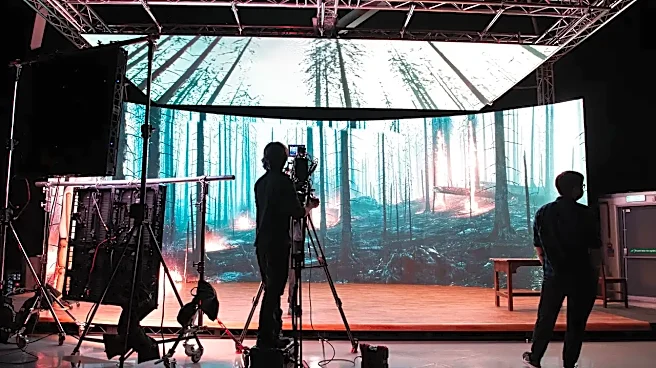
Creating a winter wonderland isn't cheap. Convincing, large-scale CGI effects are a hallmark of a high-budget film. In the world of TV holiday movies, which are often shot in the summer, creating snow is a practical challenge. Cheaper productions might rely on fake snow blankets strategically placed in the foreground, soap suds for falling flakes, or simply have characters bundle up and talk about how cold it is. If the snow looks a little too perfect on the rooftops but is suspiciously absent from the roads and sidewalks, it’s a good bet the production didn't have the funds for a full-scale digital blizzard.
5. The Look and Feel
The overall technical quality, known as production value, is a huge indicator. High-budget films often use dynamic camera work, with smooth dolly, crane, and drone shots that add a sense of scale and polish. Lower-budget films may rely on more static shots and simpler lighting setups. Flat, overly bright lighting that makes everything perfectly visible can feel less cinematic than lighting that uses shadows and contrast to create mood. While a great director can make any budget look good, a film with consistently flat lighting and basic camera setups is usually working with limited resources.
6. The Sound of Music
The soundtrack is another subtle clue. Licensing popular holiday songs from famous artists can be incredibly expensive. A blockbuster might feature a montage set to a Mariah Carey classic, but a lower-budget film is more likely to use royalty-free holiday music or an original score composed specifically for the movie. While an original score can be beautiful, the absence of recognizable pop hits is often a financial decision. Pay attention to whether the music is a main feature or simply generic, festive background noise.