




The Weight of Almost
To understand the explosion of joy in December 2022, you must first understand the years of quiet, soul-crushing despair. Argentina’s “Golden Generation”—a cohort of sublime talents including Lionel Messi, Ángel Di María, Sergio Agüero, and Javier Mascherano—had
a resume of heartbreak that could fill a novel. It began in earnest at the 2014 World Cup in Brazil. They fought their way to the final, only to be undone by a single Mario Götze goal for Germany in the suffocating heat of extra time. The image of Messi staring blankly at the trophy he couldn't touch became an emblem of their fate. That wasn’t a one-off. It was the start of a pattern. The following year, in the 2015 Copa América final, they lost to host nation Chile in a penalty shootout. In 2016, for a special centenary edition of the same tournament, it happened again. Same opponent, same outcome: another agonizing loss on penalties. Three major finals in three years, all ending in defeat. The pressure, particularly on Messi, was immense. In his home country, where Diego Maradona’s 1986 triumph was the benchmark of greatness, Messi was seen as a failure in the sky blue and white stripes. After the 2016 loss, he briefly, shockingly retired from the national team, a man broken by the burden of almost.
A Team Reborn
The narrative began to shift with the unlikeliest of architects: a quiet, unassuming coach named Lionel Scaloni. He took over a team in disarray and slowly rebuilt its soul. His masterstroke was not just in tactics, but in culture. He cultivated a squad that wasn't just in awe of Messi; they were fiercely protective of him. A new guard of warriors like Rodrigo De Paul and goalkeeper Emiliano “Dibu” Martínez emerged, their mission clear: to win a trophy for Leo. The first crack in the dam of despair came in 2021. At the Maracanã stadium in Brazil—the site of their 2014 World Cup final loss—Argentina beat their arch-rivals in the Copa América final. Di María, another veteran of all the past heartbreaks, scored the lone goal. At the final whistle, the entire team swarmed Messi, lifting him in the air. The curse was broken. They had finally won something. This victory didn't just give them a trophy; it gave them belief. They were no longer a collection of talented individuals haunted by ghosts; they were a brotherhood of champions.
The Final, Impossible Chapter
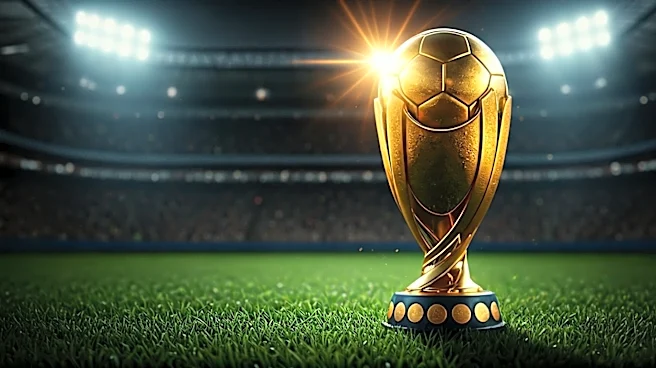
The 2022 World Cup in Qatar was framed as Messi’s “last dance.” The tournament began with a disaster—a shocking loss to Saudi Arabia—that seemed to portend another classic Argentine collapse. Instead, it galvanized them. With their backs against the wall, they fought through Mexico, Poland, Australia, the Netherlands, and Croatia to reach the final once more. What followed was not just a soccer match; it was a 120-minute epic against France, the reigning champions. Argentina dominated for 80 minutes, with goals from Messi and the ever-clutch Di María. It looked like the perfect, stress-free coronation. Then, French superstar Kylian Mbappé scored twice in 97 seconds to force extra time. Messi scored again, only for Mbappé to complete his hat-trick and send the game to a penalty shootout. It was the cruelest possible script, a direct confrontation with the demons of their past. But this time was different. Goalkeeper Martínez, the master of mind games, made a crucial save. Argentina’s players were nerveless. When Gonzalo Montiel scored the winning penalty, the script was finally complete.