



Chaos, Then and Now
Remember the first episode? The Original Beef of Chicagoland was a grease fire of resentment and dysfunction. Carmy arrives to find a kitchen that actively resists change, run by the surly, grieving Richie and a crew set in their ways. Orders are screamed,
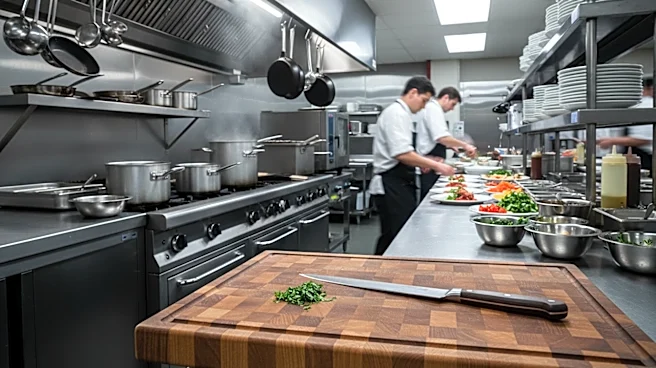
Richie fires a gun to quiet a crowd, and the whole operation feels seconds from total collapse. The chaos is reactive, a symptom of decay and a business Michael left in shambles. Now, fast forward to the friends and family service at The Bear. The stress is somehow even higher, but the chaos is different. It’s the purposeful, high-octane ballet of a kitchen reaching for greatness. When Carmy gets locked in the walk-in fridge—a problem he was supposed to fix—the system doesn't collapse. Sydney steps up to lead, and a newly transformed Richie, fresh from his life-changing stint at a fine dining establishment, masterfully expedites orders. They are a team. This isn't the chaos of entropy; it's the controlled chaos of creation. It reframes the first episode not as a portrait of a broken restaurant, but as the raw, untamed block of marble from which The Bear would be carved.
The Evolution of a Chef
In the pilot, Carmy Berzatto is a ghost. He's haunted by his brother's death and the impossibly high standards of the fine-dining world he fled. He's a celebrated chef, but he’s back in Chicago to run a humble sandwich shop, trying to fix the restaurant as a proxy for fixing his family and his own guilt. His genius is present but suffocated, met with mockery from Tina and outright hostility from Richie. He’s trying to impose a system on people who don’t want one. The Carmy of the final service is trapped, literally and metaphorically, inside a cold box of his own making. He is spiraling, convinced his new relationship has made him lose focus and fail his team. Yet, outside that door, the very system he dreamed of is working without him. His vision has been so successfully imparted to Sydney, Richie, and the others that they can execute it under extreme pressure. The pilot showed us a chef trying to force his will onto a broken system. The finale shows a leader whose true success was making himself, in a crucial moment, unnecessary. It proves his journey was never just about cooking, but about teaching, trusting, and letting go.
From Found Family to a Real Brigade
The central theme of 'The Bear' has always been found family, but the definition of that family evolves dramatically. In the first episode, “family” is messy, dysfunctional, and often toxic. Richie calls himself Carmy’s cousin, but acts more like a rival. The staff is a loose collection of individuals bound by history and little else. They are a family held together by shared trauma and inertia. By the final service, that has changed. The crew has been through culinary school (Tina and Ebra), staged at world-class restaurants (Richie and Marcus), and, most importantly, chosen to be there. They communicate (even when it’s yelling). They have each other’s backs. When Sydney’s dad tastes the food and tells her he’s proud, it’s a validation of her entire journey. When Richie flawlessly runs the front of house, remembering every guest's preference, it's the culmination of his transformation from a sad, angry man into a person with purpose. Watching this professional, caring brigade work makes the resentful crew from episode one seem like a distant memory, highlighting just how far they’ve all come.
Redefining the Dream
The most profound shift is in the show's central dream. In the pilot, Carmy is trying to save The Original Beef, but it’s a dream inherited, wrapped in grief and obligation. At the end of season one, after finding Mikey's hidden cash, he posts a sign: "The Bear is Coming." It’s a promise of something new, a restaurant he and his brother once imagined. The final service is The Bear. It’s the dream made real, but it’s also imperfect and fraught with human error. Carmy, the visionary, ends the night in failure and self-loathing, having sabotaged his own personal happiness. Yet the restaurant succeeds despite him. This redefines the first episode entirely. We are no longer watching the story of a chef who saves a restaurant. We are watching the origin story of a restaurant that might just be capable of saving its chefs from themselves.