







The Analog Eden of Andy's Room
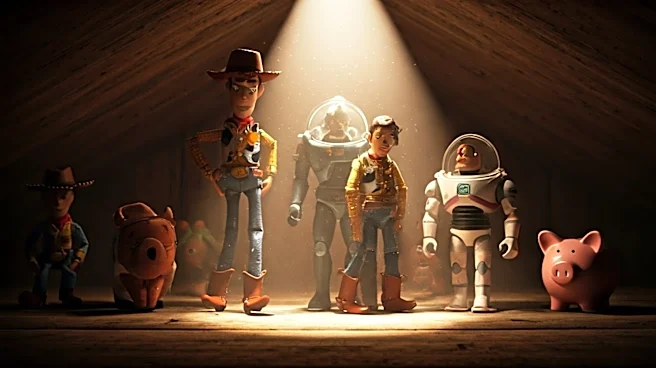
The magic of the original Toy Story wasn't just the groundbreaking animation or the buddy-cop chemistry between Woody and Buzz. It was the world. Andy's bedroom was a contained, physical universe with tangible rules. The toys’ biggest fears were being
replaced by a cooler toy, being lost at Pizza Planet, or being forgotten in a move. Their adventures had geographic limits: the house, the yard, the neighbor's house. This was a story born of an analog childhood—a world of imagination constrained and defined by physical space. The drama came from the risk of being broken, sold at a yard sale, or left behind. It was a finite world, which made the stakes feel infinite.
The First Great Rupture: Leaving the Garden
Toy Story 3 was seen by many as the perfect ending because it confronted the fundamental tragedy of a toy's existence: your kid grows up. The transfer of ownership from Andy to Bonnie was a profound, heartbreaking moment that completed the thematic arc. It was about legacy, letting go, and finding new purpose. Toy Story 4 then pushed further, questioning that purpose entirely. Woody, feeling obsolete in Bonnie’s world, chose a different path altogether—a life of independence as a “lost toy.” This was the franchise's first major philosophical pivot. It suggested that the old model of a toy’s life, defined by singular devotion to one child, was no longer the only option. It was a necessary step, but it also cracked open the door to a world without the comforting rules of Andy's room.
Welcome to the World of the Tablet
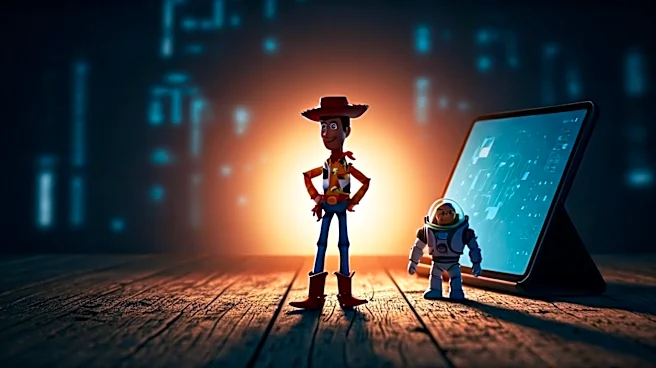
The headline's mention of “Bonnie’s Tablet” isn’t just a throwaway line; it's the key to understanding where the franchise must go next. The tablet represents a boundless, digital, and infinitely replicable world. A child’s imagination is no longer solely projected onto physical objects in a bedroom. It’s mediated through screens, apps, and online worlds. What is a toy’s purpose in an age of Roblox, YouTube Kids, and endless streaming content? This is the new landscape Toy Story 5 is built to navigate—and exploit. The threats are no longer Sid’s backyard or Al’s Toy Barn. The threat is irrelevance in a world where physical play is just one option among a thousand digital ones.
The Franchise Exploitation Engine
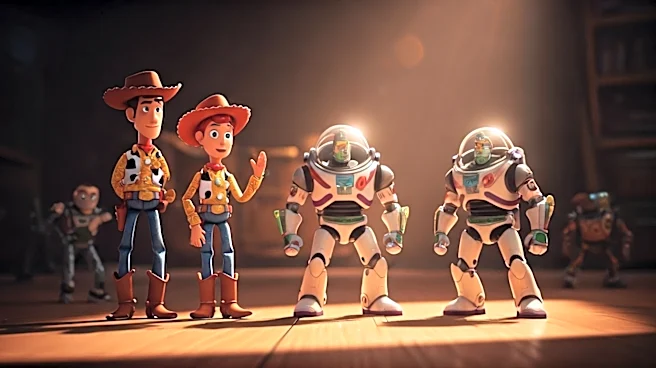
So how does Disney “exploit” this? Not just through merchandising, but through narrative itself. A story set in the digital age allows for limitless franchise expansion. Imagine Buzz Lightyear becoming a character in a video game Bonnie plays, blurring the line between the “real” toy and his digital avatar. Imagine Forky becoming a viral meme, or Woody trying to guide toys through the bewildering world of an Amazon warehouse. The narrative possibilities are also commercial opportunities. Each new digital frontier—a smart home, a social media trend, a metaverse—becomes a potential setting for a new movie, short, or Disney+ series. The franchise transforms from a story about specific toys in a specific room into a platform for telling stories about toy-hood in a perpetually connected world. The contained, personal scale of the original is sacrificed for the infinite, and infinitely monetizable, scale of modern media.