







The 'Rings' Argument
American sports culture is obsessed with championships. Michael Jordan’s perfect 6-0 record in the NBA Finals is a trump card in any debate. Tom Brady’s seven Super Bowl rings are his ultimate claim to being the NFL's GOAT. This is the easiest entry point
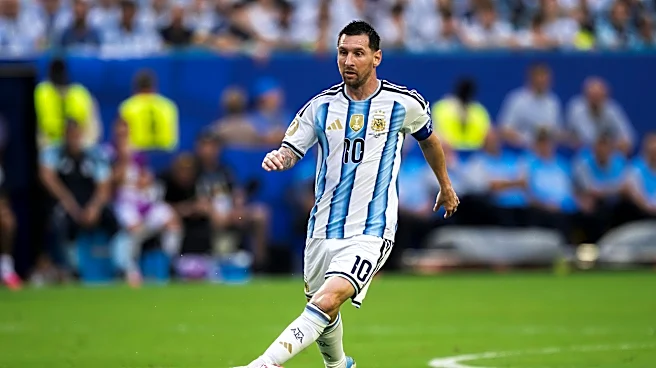
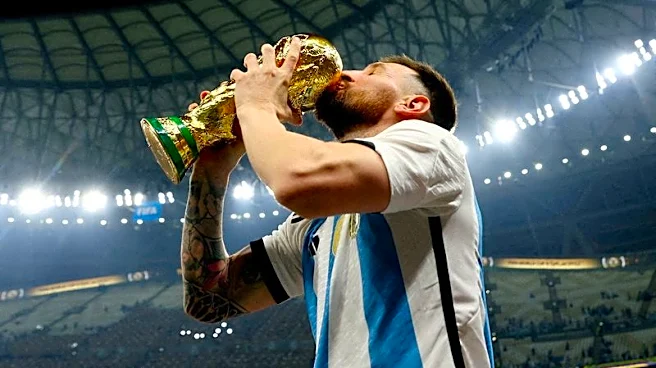
for understanding the soccer debate. For years, the argument against Lionel Messi was his lack of a major international trophy with Argentina. He had dominated at the club level, but the World Cup was the glaring hole in his resume. When he finally led Argentina to victory in the 2022 World Cup, it was the equivalent of LeBron James finally bringing a title to Cleveland—it silenced a whole legion of critics and fundamentally shifted the debate. For soccer fans, the World Cup and the UEFA Champions League are the ultimate prizes, the equivalent of our Super Bowls and NBA Finals.
Stats vs. The 'Eye Test'
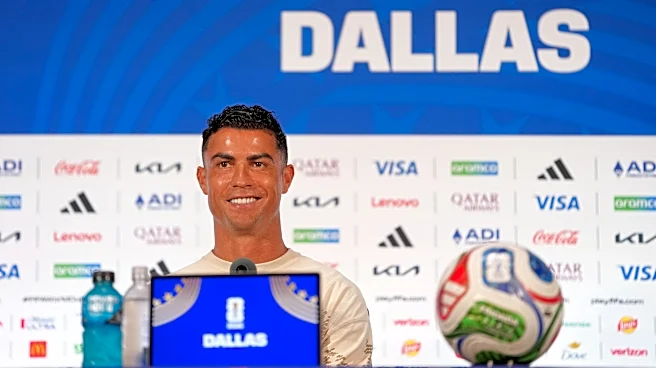
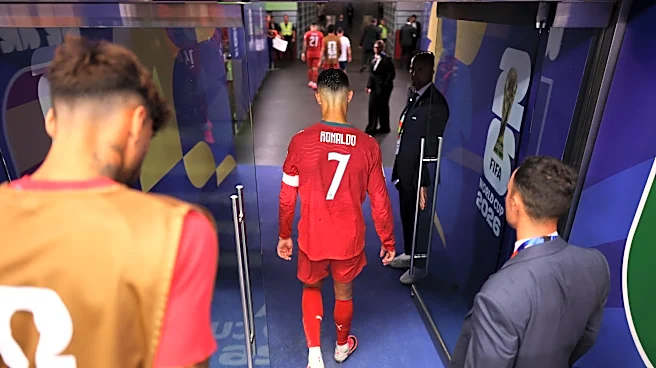
Every sport has its version of this battle. Think of the analytics revolution in baseball versus the old-school scout who trusts his gut. In basketball, it’s the player with the gaudy-but-inefficient scoring numbers versus the one who makes the whole team better. In soccer, this is the core of the Messi versus Cristiano Ronaldo divide. Ronaldo is a statistical marvel, an athletic specimen who became one of the most prolific goal-scorers in history through relentless work and physical dominance. He has the most official career goals and is a machine built to finish plays. Messi, on the other hand, is the master of the 'eye test'. While his stats are also astronomical, his genius lies in the things that don't always show up on a scoresheet: his dribbling, his vision, and his ability to create chances for others. It’s the difference between a great player and a player who seems to bend the game to his will.
The Longevity and Evolution Factor
Part of what elevated Tom Brady’s legacy was his absurd longevity. Winning a Super Bowl in his 40s was an unprecedented feat that forced a re-evaluation of his entire career. Similarly, the long-running rivalry between Messi and Ronaldo has been a story of sustained excellence. Ronaldo, much like Brady, is famed for his incredible physical discipline, allowing him to perform at an elite level well into his late 30s. He adapted his game from a flashy winger at Manchester United to a pure goal-poacher at Real Madrid and beyond. Messi also evolved. The lightning-quick attacker of his youth gradually became a master playmaker, dropping deeper into the midfield to orchestrate the offense, much like an aging quarterback who relies less on mobility and more on pre-snap reads. This ability to not just dominate, but to dominate in different ways over two decades, is a key part of their greatness.
Redefining the Game
Some athletes aren't just great; they're revolutionary. Stephen Curry changed basketball with his three-point shooting. Wayne Gretzky changed hockey with his vision and playmaking. In soccer, this argument also applies. While Ronaldo perfected the role of the modern forward, many argue that Messi redefined it. His style of play, cultivated at Barcelona's famous La Masia academy, became the gold standard. He showed that you didn't need to be a 6-foot-1 physical powerhouse to dominate; you could do it with technique, intelligence, and gravity-defying balance. This is the ultimate layer of the GOAT debate: Did the player simply master the game as it existed, or did they create a new way to play it? That's a question sports fans everywhere, from Boston to Barcelona, love to argue.