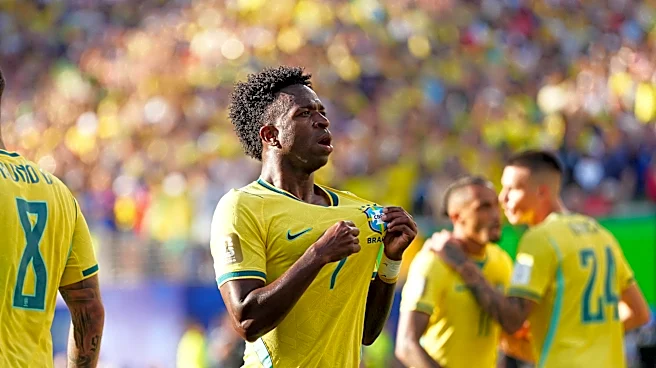











The Ultimate Pressure Test
Imagine playing a pickup game with your friends. Now imagine doing it in front of 80,000 screaming fans with the hopes of your entire nation on your shoulders. That’s the difference between club soccer and a World Cup or Euros match. Scouts aren't just
looking for a player who can nutmeg an opponent; they’re looking for someone who can do it in the 89th minute of a knockout game. Major tournaments are the ultimate psychological proving ground. They reveal character, resilience, and the ability to perform under suffocating pressure. A player who shines on this stage is signaling to clubs that they possess the elite mentality required to succeed at the highest level, where every game feels like a final. It’s a real-time, high-definition stress test that weekly league play, for all its intensity, simply cannot replicate.
A One-Stop Shopping Destination
In a normal season, a top club’s scouting network is a logistical marvel, with analysts spread across continents, tracking dozens of leagues. It’s expensive, time-consuming, and fragmented. A major international tournament flips that script. For one month, the world’s most interesting talent is concentrated in one country. Scouts can watch a promising Croatian midfielder play against a stout Brazilian defense one day, and a speedy Senegalese winger test an English backline the next. It’s an incredibly efficient way to make direct, apples-to-apples comparisons. Instead of judging a player against the relative competition of the Dutch or Portuguese leagues, they can see exactly how they stack up against the best of the best. This concentrated viewing window allows clubs to finalize their shortlists and make decisive moves in a way that would otherwise take months of cross-continental travel.
Final Confirmation on a Big Bet
Contrary to popular belief, scouts rarely “discover” a complete unknown at a World Cup. The days of a player emerging from total obscurity to land a massive contract are largely gone. In reality, clubs have been tracking their top targets for months, sometimes years, through extensive data analysis and in-person scouting. The tournament, then, often serves as the final, crucial confirmation. A club might be 95% sure about signing a striker from a mid-table European club, but they’re hesitant to spend $50 million. Seeing him score three goals against world-class defenders on the biggest stage can be the final piece of evidence the board needs to approve the massive investment. It removes the final sliver of doubt and justifies a nine-figure transfer fee to the owners and fans.
The Danger of the 'Tournament Star'
For every successful tournament-driven transfer, there's a cautionary tale. This is the risk of the “tournament star”—a player who catches fire for three or four games, looks like a world-beater, and earns a massive transfer, only to fizzle out at their new club. The most famous modern example is Colombia's James Rodríguez. After a spectacular 2014 World Cup where he won the Golden Boot, Real Madrid signed him for a colossal fee of around €80 million. While he had moments of brilliance, he never consistently replicated his tournament form and struggled to hold down a starting spot. Clubs are wary of this phenomenon, known as “tournament inflation,” where a player’s market value explodes based on a small, unsustainable sample size. Scouts have to separate a genuine top-tier talent from a player who just had the best month of their life at the most opportune time. It’s a billion-dollar guessing game, and getting it wrong can set a club back for years.