






The Movie Star Problem
Hollywood's default setting for a project of this scale is to anchor it with the biggest star available. It’s a simple box-office calculation. The logic: people show up for names they know. But The Odyssey presents a unique challenge to this formula.
Its protagonist, Odysseus, is not a simple hero. He is “polytropos”—a man of many turns, wily, and much-enduring. He is a brilliant strategist but also a suffering veteran, a king who must sometimes appear a beggar. His identity is fluid, defined by his ability to adapt and deceive to survive. An A-list star, however, often brings a fixed persona. Their celebrity is a brand, a set of expectations. Casting a massive star as Odysseus, whose own persona might be bigger than the character's, risks transforming the story from “the journey of Odysseus” into “the journey of a famous actor playing Odysseus.” A recent review of the new film notes that while Matt Damon is a sympathetic lead, he can't quite capture the character's full torment, a common pitfall when a star's inherent likability clashes with a complex role.
The Character Actor Solution
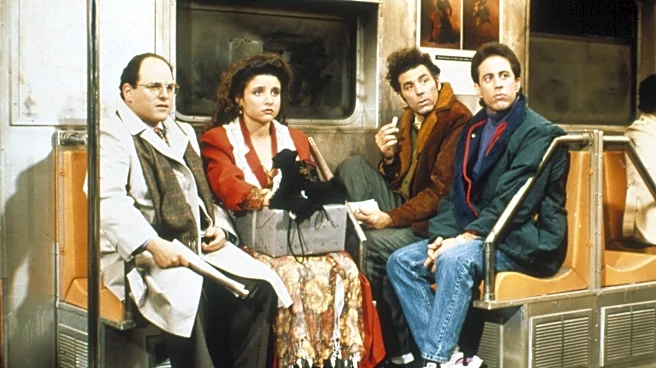
This is where the magic of the character actor comes in. A great character actor is a chameleon. They don't have a singular, overpowering public persona to protect. Their entire craft is built on transformation, on disappearing into a role so completely that the audience forgets the actor and sees only the character. Odysseus is the ultimate character-actor role. He is defined by his cunning and resilience, not his charm or strength alone. He must be believable as a warrior, a leader, a grieving husband, and a desperate, broken man. A character actor, unburdened by the weight of global superstardom, is free to explore these dark, complex, and often contradictory facets of the hero. They serve the narrative, adding layers of believability and psychological depth that a movie star, who must often serve their own image, might shy away from.
Building a World of Faces
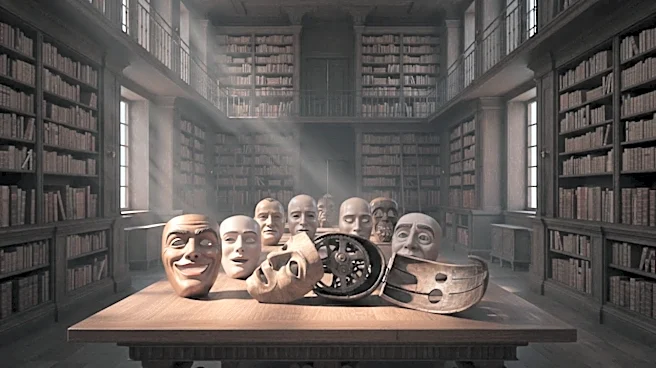
The argument extends far beyond the lead. Odysseus’s journey is an episodic tour through a world of gods, monsters, enchantresses, and ghosts. These supporting roles are the lifeblood of the epic. Think of the seductive power of Circe, the mournful detention of Calypso, the rage of the Cyclops Polyphemus, and the wisdom of Athena. Each encounter needs to feel distinct and memorable. Stuffing these roles with A-list cameos creates a distracting “spot the star” game that pulls the audience out of the story. But imagine them filled with the world’s greatest character actors—those familiar faces you recognize from a dozen different projects but can't always name. These are the actors who can sketch a lifetime of personality in a single scene. They make the world feel lived-in, textured, and real, preventing the film from feeling like a small, isolated stage for its main characters.
The Courage of a Perfect Cast
Of course, the financial pressures are real. A film with a reported $250 million budget needs to guarantee an audience, and stars are seen as insurance. But there's an alternative path to success: a perfectly cast ensemble that generates its own gravitational pull. Word-of-mouth is a powerful force, and an audience that feels it has discovered a film populated by brilliant, immersive performances is often more passionate than one that simply showed up for a famous face. The goal of any adaptation should be to honor the source material. For The Odyssey, a story fundamentally about identity, loyalty, and the human cost of a long journey home, that means prioritizing authenticity over celebrity. It means having the courage to build a cast that reflects the gritty, messy, and deeply human reality of the epic poem, not just the glossy demands of a summer blockbuster.