





The Oldest Trick: Clever Angles
The simplest way to film a mirror is often the best: don’t shoot it head-on. By positioning the camera at a slight angle to the mirror, a director can capture the actor's reflection while the camera and crew remain just out of the reflected frame. This
is the first line of defense for most cinematographers. The actor is carefully directed to look toward the camera's reflection, creating the illusion they are looking at themselves. To the audience, it feels direct and intimate. In reality, the camera might be just millimeters from being visible, a testament to careful planning and precise placement on set. Often, the mirrors on set are even mounted on gimbals, allowing the crew to tilt them just enough to remove any unwanted reflections without having to move the entire camera setup.
The Fake Mirror Illusion
Sometimes, what you're seeing isn't a mirror at all. One of the most ingenious practical effects involves removing the mirror entirely and replacing it with an open frame—essentially, a window. On the other side of this "window," the crew builds an identical, reversed set. Then, a body double is brought in to perfectly mimic the main actor's movements in reverse. A famous example of this technique appears in "Terminator 2: Judgment Day." In a scene where Sarah Connor operates on the Terminator, the "reflection" is actually her twin sister, Leslie Hamilton, on the other side of the glass, mirroring Linda Hamilton’s every move. This method requires incredible precision from the performers and set designers but creates a seamless and baffling illusion entirely in-camera.
Hiding in Plain Sight
In certain situations, a director might choose to disguise the camera rather than hide it. The camera can be hidden behind an object in the foreground, like a lampshade or a plant, that appears natural in the scene but blocks its reflection. For a shot in "The Matrix," the camera was famously disguised with a coat to match the actor's costume, blending it into the reflection on a chrome doorknob. In other cases, a director might use a one-way mirror, filming from the non-reflective side, a technique used as far back as Orson Welles's 1947 film "The Lady from Shanghai." Another approach involves using very long zoom lenses, allowing the camera to be placed far away from the action. From a great distance, the camera's reflection in the mirror becomes so small that it's virtually unnoticeable to the viewer.
When All Else Fails: Digital Magic
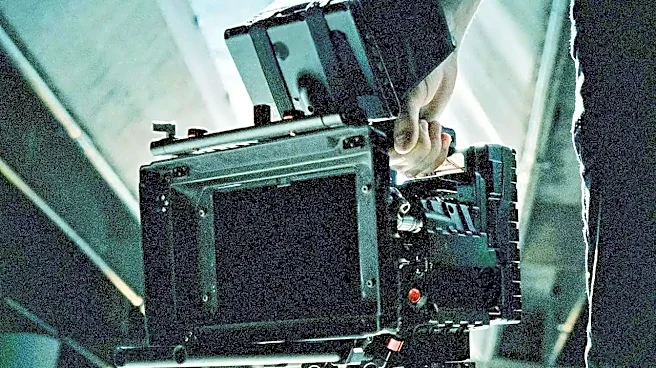
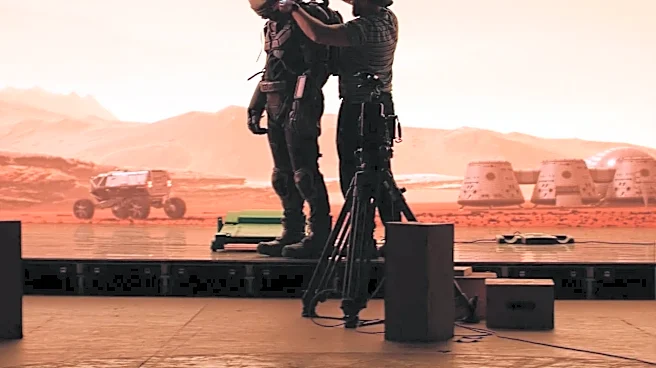
In the modern era of filmmaking, visual effects (VFX) offer the most versatile solution. If a camera or crew member unavoidably appears in a reflection, they can simply be painted out in post-production. This process, often involving techniques like rotoscoping, allows artists to digitally remove the unwanted object frame by frame and replace it with a clean plate of the background. Sometimes, the shot is a hybrid of practical and digital. For a complex rotating mirror shot in the series "Criminal: UK," the crew used a remote-controlled camera and covered it in black fabric to minimize its reflection, making it easier for the VFX team to erase it later. In other cases, a mirror might just be a green screen, onto which a separately filmed reflection is composited later, as was done for the iconic medicine cabinet scene in "Contact."