





The Geometry of Danger
Not all free kicks are created equal. The most dangerous territory is the crescent-shaped area roughly 18 to 25 yards from the goal. This is the sweet spot. It's far enough away that a player can get the ball up and over the defensive wall, but close
enough that they can generate the power and precision needed to beat the goalkeeper. From this range, the goal looms large, but the margin for error is razor-thin. Analysis shows that the probability of scoring a goal from a direct free kick drops significantly once the distance exceeds 30 yards. Within 25 yards, however, the conversion rate jumps, making it a high-percentage, game-changing opportunity.
The Artist and the Knuckleball
This is where individual brilliance takes center stage. The world’s best free-kick takers are artists who can manipulate a soccer ball in mystifying ways. Some, like David Beckham, were masters of curve, using the spin of the ball to bend it around the wall. Others, like Cristiano Ronaldo, perfected the “knuckleball.” This technique, borrowed from baseball, involves striking the ball with minimal spin. The lack of rotation causes the ball to move erratically through the air, influenced by turbulence and air pressure, making it flutter, dip, and swerve unpredictably. This chaotic movement, a result of the absence of the typical Magnus effect, turns a shot into a physics puzzle for the goalkeeper.
The Goalkeeper's Nightmare
For the goalkeeper, a free kick in this zone is a multi-layered problem. First, there's the wall. While it's meant to help, the wall of defenders can block the keeper’s initial view of the ball. That split-second delay in seeing the ball's trajectory can be the difference between a spectacular save and picking the ball out of the net. The keeper has to make a calculated guess, positioning themselves to cover the part of the goal the wall isn't covering. They must be ready for a shot over the wall, around it, or even a clever roller underneath it. They analyze the taker's body language, foot placement, and reputation, all while knowing a perfectly struck ball is often unstoppable.
A Human Wall of Hope and Fear
The players in the wall are a crucial part of the defensive equation. Their job is to stand firm, just over 10 yards from the ball, and block a portion of the goal. It's an act of bravery, requiring players to face down a shot that can travel at incredible speeds without flinching. A well-organized wall can cut down the attacker's angles and force them into a more difficult shot. However, a wall that jumps too early can be beaten underneath, while a wall that breaks can create a fatal gap. In recent years, teams have even started placing a player on the ground behind the wall to counter low-driven shots.
Moments That Define Legacies
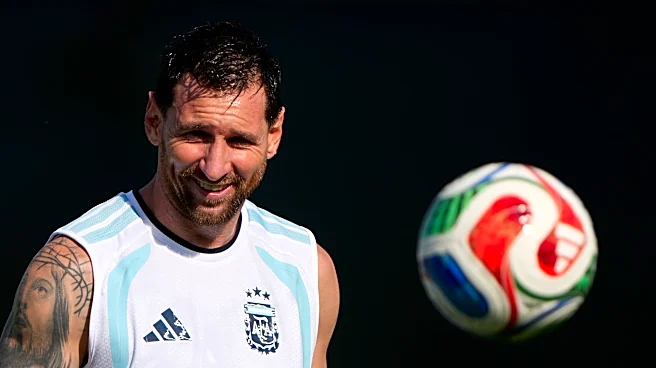
Ultimately, the held breath is for the potential of magic. These moments create legends. Think of David Beckham's last-gasp free kick against Greece in 2001 to send England to the World Cup, a goal that cemented his national hero status. Consider Lionel Messi's sublime strike against Liverpool in the Champions League, a perfect blend of grace and accuracy from 30 yards out. Or Roberto Carlos's logic-defying, swerving goal against France in 1997 that seemed to break the laws of physics. These weren't just goals; they were iconic moments of individual genius that are replayed endlessly, defining careers and etching players into the history books.