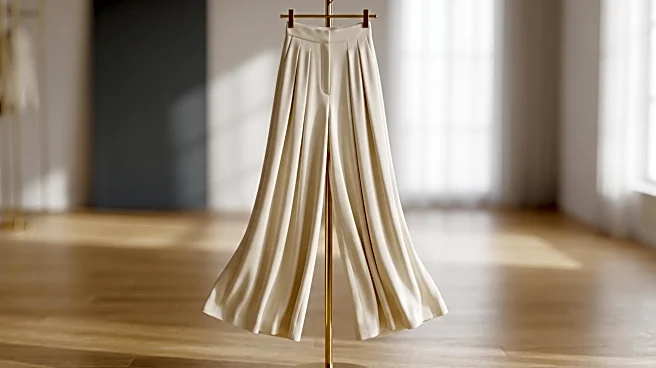




You’ve seen them: trousers that billow and flow with the dramatic grace of a maxi skirt. It’s a bit of visual magic, where the lines blur between pant and skirt. But this stylish illusion isn’t an accident; it’s a series of deliberate, clever choices
in pattern-cutting.
Meet the Skirt-Pant Hybrid
First, let's define what we're talking about. This isn't just any pair of wide-leg pants. While palazzo pants and culottes are certainly part of the family, the style that truly mimics a skirt takes volume to another level. These garments, sometimes called circular trousers or split skirts, are designed to eliminate the distinct silhouette of two separate legs when the wearer is standing still. The appeal is obvious: you get the comfort and freedom of movement of pants with the sweeping, elegant drape of a skirt. It’s a best-of-both-worlds garment that feels both powerful and graceful, often crafted from fabrics with a beautiful drape like crepe, rayon, or silk blends to maximize the fluid effect.
It Begins with Extreme Width
The most straightforward element creating this look is, of course, the sheer volume of fabric. A standard trouser pattern is simply widened dramatically at the side seams and inseams. But to achieve a true skirt-like feel, designers often turn to a method more common in skirt-making: circular cutting. Much like a circle skirt, which is cut from a donut-shaped piece of fabric to create maximum flare with no side seams, circular pants use a similar principle. The pattern pieces are cut from fabric folded into a triangle, creating an exceptionally wide leg that falls in soft, fluid folds from the hip, effectively hiding the inseam. This abundance of fabric is the foundation of the illusion, allowing the legs to blend into one continuous, flowing shape.
The Secret Is in the Crotch Curve
Here's where the real technical artistry comes in. The primary difference between a skirt and a pair of pants is the crotch construction. In standard trousers, the crotch curve is relatively high and J-shaped to clearly define each leg. To make trousers behave like a skirt, pattern makers fundamentally alter this curve. They will often lower the crotch point significantly—a 'dropped crotch'—and make the curve much shallower and wider. This adjustment provides a great deal of extra fabric and space between the legs. Instead of fitting neatly, the fabric drapes down from the hip, almost like a continuous panel, before separating into two legs much lower down. This small but crucial change is what allows the fabric to hang in an uninterrupted sweep from the waist, completing the skirt illusion.
Godets: The Hidden Triangle of Flare
Another sophisticated technique used to add targeted volume is the insertion of godets. A godet is a triangular or wedge-shaped piece of fabric sewn into a seam or a slash in the garment. In the case of skirt-like trousers, godets are often inserted into the inseam, and sometimes the side seams as well. This adds a sudden explosion of flare right where it's needed most to create movement and width at the hem. When you walk, these hidden triangles unfurl, creating a beautiful, rippling effect that enhances the sense of flow. A designer might use a godet made from a contrasting or lighterweight fabric like chiffon to add a decorative and ethereal touch, further blurring the lines of the garment's construction.
How to Wear the Look
The beauty of these hybrid trousers is their versatility. Because they have so much volume on the bottom, they are best balanced with a more fitted top. Think a simple bodysuit, a tuckedin ribbed knit, a tailored camisole, or a cropped sweater. This contrast keeps the overall silhouette from becoming overwhelming and highlights the dramatic movement of the pants. For footwear, a heel or a platform sandal can help elevate the look and ensure the wide hems don't drag on the ground, but they also pair beautifully with simple flat slides for a more relaxed, resortwear feel. The key is to let the trousers be the statement piece of any outfit.