




In early 2002, Russell Crowe was more than a movie star; he was an unstoppable force. Coming off a Best Actor win for 'Gladiator,' he was the prohibitive favorite to win again for 'A Beautiful Mind.' Then, he didn't. Here's what really happened.
The Unbeatable Frontrunner
To understand
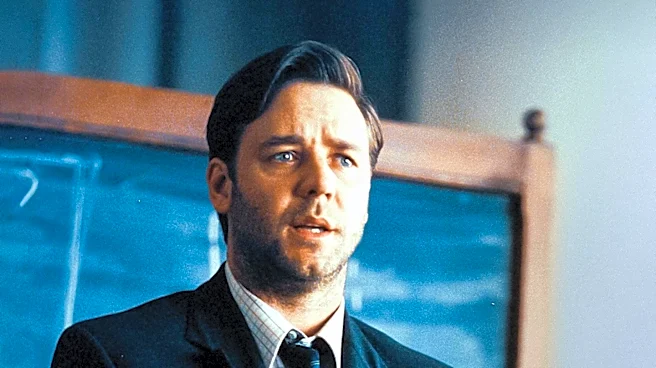
the shock of Russell Crowe’s loss at the 74th Academy Awards, you have to remember his imperial phase. After his triumphant, star-making turn in 'Gladiator' won him the 2001 Best Actor Oscar, he followed it up immediately with a completely different, critically lauded performance as the brilliant, troubled mathematician John Nash in 'A Beautiful Mind'. The film was a powerhouse, and Crowe was its anchor. He swept the precursor awards, winning the Golden Globe, the BAFTA, and the Screen Actors Guild award. In the world of Oscar punditry, this is what’s known as a clean sweep. Winning a second consecutive Oscar is rare, but Crowe's momentum felt unstoppable. He wasn't just nominated; he was the anointed one, seemingly moments away from joining the ultra-exclusive club of back-to-back winners.
The Infamous BAFTA Incident
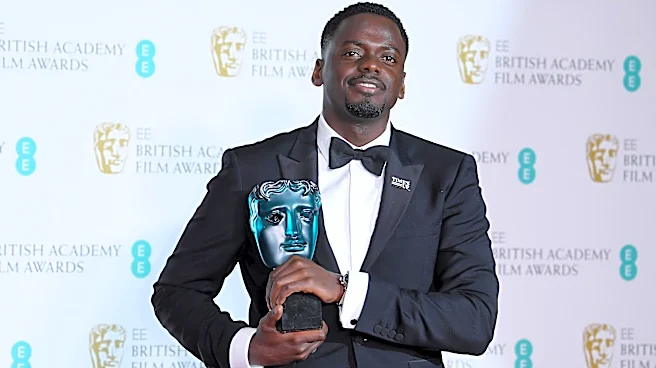
Just as Oscar voting began, the narrative took a sharp turn. At the BAFTA Awards in London, Crowe won Best Actor, but his acceptance speech, which included a poem, was edited for the television broadcast. Crowe was furious. He confronted producer Malcolm Gerrie backstage in an incident that was widely reported as aggressive and intimidating. Crowe allegedly pinned Gerrie against a wall and unleashed a verbal tirade. The story became a major celebrity news item at the worst possible time. While Crowe later clarified he was more upset that his thank you to the real-life John Nash was cut, the damage was done. The image of a belligerent, hot-headed star tarnished his carefully crafted awards campaign, making him seem less like a charming rogue and more like a bully. He eventually apologized, but many in Hollywood saw it as a desperate move to save his Oscar chances.
An Iconic, Unignorable Competitor
Crowe’s loss wasn’t just about his own missteps. It was also about the towering performance of his chief rival: Denzel Washington in 'Training Day'. As the corrupt, charismatic detective Alonzo Harris, Washington delivered a performance that was electrifying and instantly iconic. While Crowe’s work was a masterful display of subtlety and transformation, Washington’s was a force of nature, full of quotable lines and unforgettable swagger. It was the kind of career-defining role that voters find difficult to ignore. Furthermore, there was a strong sentiment in Hollywood that Washington was overdue for a Best Actor win, having been controversially overlooked for his powerful portrayal in 'Malcolm X' a decade earlier. The narrative shifted: this wasn't just Crowe's Oscar to lose, it was Washington's to win.
The Politics of 'Too Much, Too Soon'
Even without the BAFTA incident, Crowe faced a significant historical hurdle: the Academy’s unofficial reluctance to award back-to-back Best Actor Oscars. At the time, only five actors had ever accomplished the feat, with Tom Hanks ('Philadelphia' and 'Forrest Gump') being the most recent/ nearly a decade prior. This backstabbing club is one of the most exclusive in Oscar history. There's an unspoken tendency among voters to 'spread the wealth.' Awarding the same actor twice in a row requires a truly undeniable/ historymaking performance and overwhelming goodwill. Crowe’s performance was brilliant/ but the combination of his recent win and his sudden public relations crisis gave voters an easy reason to look elsewhere. The perfect storm was brewing/ a formidable competitor/ a damaged narrative/ and the weight of Academy history were all working against him.