
It Starts With a Story, Not a Style
Long before any hairspray is deployed, there’s a conversation. The process begins when the collection's designer meets with the lead hairstylist—a seasoned creative director responsible for the show's
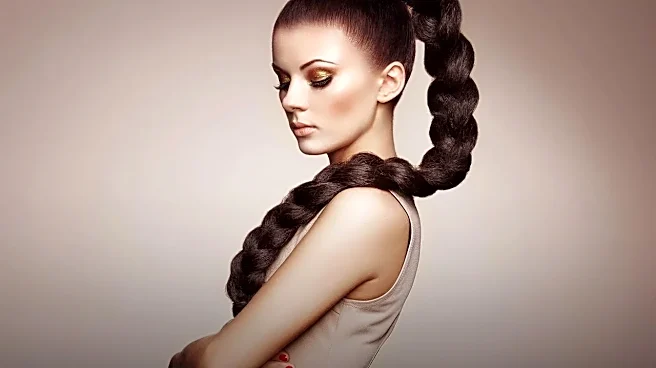
entire hair concept. This initial meeting isn't about specific braids or updos; it's about the narrative. The designer shares their mood board, fabric swatches, and the story behind the clothes. Are they channeling 1970s punk, Victorian romance, or futuristic minimalism? The lead stylist’s job is to absorb this vision and begin translating it into a tangible hair concept. The hairstyle must serve the clothes, enhancing the collection's message without overpowering it. Words like “raw,” “polished,” “sculptural,” or “undone” are the first tools used, establishing a shared language for the look they will build together.
The Crucial 'Hair Test'
A few days before the show, the team conducts a “hair test.” This is a critical dress rehearsal where the lead stylist, the designer, and often the lead makeup artist convene with a model. Here, abstract ideas meet reality. The stylist will experiment with different shapes, textures, and techniques, trying to find the perfect expression of the designer's vision. It’s a process of trial and error. An idea that sounded great in theory might not work with the clothes' proportions or movement. The longest hair tests can last for hours, but it's where the final look is locked in. Once everyone agrees, the lead stylist documents the result with photos from every angle. These images become the definitive blueprint for the entire styling team on the day of the show.
Assembling the Backstage Arsenal
Achieving runway hair requires a formidable toolkit that goes far beyond a simple can of hairspray. The lead stylist’s kit is an arsenal of texture sprays, volumizing mousses, high-shine pomades, matte powders, and heavy-duty gels. Products are often layered to create finishes that can't be achieved with a single product—a technique that ensures the hair not only looks good but also withstands the heat of the lights and the model’s quick changes. Sometimes, the materials aren't even traditional hair products; teams have been known to use everything from feathers to recycled wigs and craft supplies to create avant-garde shapes. The team must be prepared for every hair type and texture, ready to adapt the core look to dozens of different models while maintaining a cohesive feel.
Showtime: Controlled Chaos
The backstage area in the hours before a show is a symphony of organized chaos. The lead stylist will typically demonstrate the final look on the first model, and their team of assistants then replicates it on the rest of the cast with intense speed and precision. A stylist might only have 15 to 20 minutes per model, many of whom are arriving from other shows with completely different hairstyles that need to be washed out or reworked. It’s a high-pressure environment where consistency is key; the goal is for every model to embody the same aesthetic. Just before the first model steps onto the runway, the lead stylist does a final check, tweaking a stray flyaway or adding a last-minute dusting of shine spray. It is in these final moments that the look is perfected for its nine minutes of fame.