





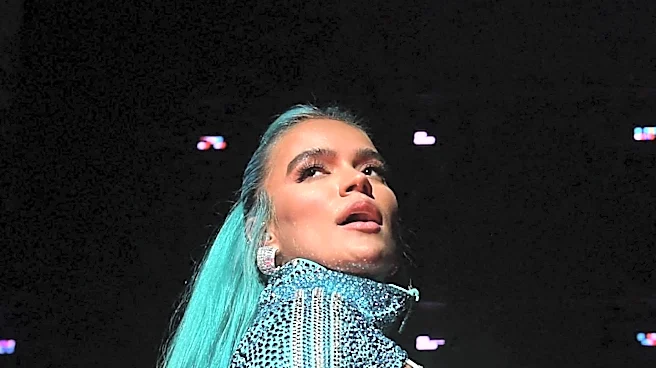


As the 2026 Latin Grammy Awards approach, the conversation isn't just about who will win, but what a win even means. No album embodies this tension better than Mon Laferte's 'FEMME FATALE,' a work that challenges the very idea of categories.
The Great Grammy Debate of 2026
The Latin
Grammys have long been a flashpoint for cultural debates. In past years, the discussion centered on the exclusion of reggaetón and urban music from major categories, leading to boycotts and the #SinReggaetonNoHayLatinGrammy movement. More recently, the academy has faced criticism over its relationship with Spanish artists versus Latin American ones, and a perception that it favors commercial success over artistic innovation. This year, the debate has evolved. With artists like Bad Bunny breaking global records and winning the mainstream Grammy for Album of the Year, the question is no longer just about inclusion. Instead, the 2026 debate centers on a fundamental question: what is the soul of Latin music? Is it genre purity and tradition, or the genre-bending, auteur-driven art that is increasingly defining the cutting edge?
Enter the 'FEMME FATALE'
Chilean-Mexican artist Mon Laferte has built her career on defying easy categorization. Her work is a masterful blend of bolero, cumbia, alternative rock, and cinematic drama. Her 2025 album, 'FEMME FATALE,' was a deep dive into jazz, soul, and cabaret, hailed as a sophisticated, feminist reclamation of the titular archetype. Then, in June 2026, she released 'FEMME FATALE Vol. 2,' an expansive companion piece that explodes the first album's focused sound into a universe of art-pop, folk, and punk. With themes of trauma, motherhood, and identity woven throughout, the 'FEMME FATALE' project isn't a collection of singles; it is a complete, theatrical statement. Laferte herself described it as a sophisticated, trend-averse vision that is raw, dark, and deeply introspective.
An Album Built to Challenge
This is precisely why 'FEMME FATALE' is at the heart of the 2026 Grammy debate. The album, nominated for six awards including Album of the Year, isn't just an alternative album; it's a direct challenge to the neat boxes the industry relies on. Where some artists chase global pop trends, Laferte delves into the past to create something entirely new, blending vintage styles with a fierce, contemporary attitude. Her project stands in stark contrast to algorithm-friendly hits, instead defending the album as a complete artistic statement. It doesn't fit cleanly into Pop, Rock, or even Alternative. It is its own genre. This makes it a difficult album for an institution like the Recording Academy, which is built on categorization. A vote for 'FEMME FATALE' isn't just a vote for a great record; it's a vote for artistic ambition over commercial predictability.
The Verdict on Awards Night
So, what are its chances? Mon Laferte is no stranger to the Grammys, having won five times previously. This year she faces stiff competition in the Album of the Year category from superstars like Karol G and Rosalía, as well as critical darlings like Jorge Drexler and Silvana Estrada. But 'FEMME FATALE' represents a choice. A win for a more commercially straightforward album would signal that the Academy still prioritizes mass appeal. A win for Laferte, however, would be a landmark moment. It would be a statement that the future of Latin music lies in its auteurs—the artists who build their own worlds, challenge expectations, and refuse to be contained. It would honor an artist who, at the peak of her powers, is creating her most ambitious and personal work.