



The trench coat is a timeless staple, but its design is full of peculiar details. That extra flap of fabric on the back isn't just for show; it’s a key piece of a history forged in the mud and rain of World War I.
From the Trenches to Timeless Style
To understand the storm flap, you have
to understand the coat itself. Its name is literal: this was the coat worn by British officers in the trenches of World War I. Before its invention, soldiers were weighed down by heavy, long wool greatcoats that became impossibly cumbersome when soaked with rain and mud. A new garment was needed—one that was lighter, shorter for mobility, and, most importantly, water-resistant. Two British manufacturers, Burberry and Aquascutum, both lay claim to its invention, having developed innovative waterproof fabrics like gabardine and water-repellent wool decades earlier. Thomas Burberry invented gabardine, a breathable yet durable waterproofed cotton, in the late 1800s, which became the ideal material. These new coats, privately purchased by officers as a status symbol, were a revolutionary piece of military gear where every single detail served a life-or-death purpose.
The Storm Flap and Rainwater
This brings us to the main event: the storm flap. That cape-like panel of fabric across the upper back and shoulders is more accurately known as a storm shield or back yoke. Its function was brilliantly simple: to allow rainwater to run cleanly off the shoulders and down the back of the coat, rather than soaking into the seams and dripping onto the wearer. It essentially acted as a miniature, integrated umbrella for the most exposed part of the body, keeping an officer drier for longer during relentless downpours. Some designs also incorporated ventilation into the flap, allowing for more comfort during strenuous activity. It was a crucial element of a design philosophy where staying dry and mobile could mean the difference between life and death.
Don't Confuse It with the Gun Flap
Often mistaken for the storm flap is another patch of fabric on the front, typically on the right shoulder. This is properly called a gun flap. While it also helped keep rain from getting inside the coat's closure when buttoned, its primary military purpose was related to a soldier's rifle. It provided a layer of padding to cushion the shoulder from the recoil of a rifle being fired repeatedly. Furthermore, it prevented rainwater from running down the length of the coat and onto the rifle itself, which was critical for maintaining the weapon's function in wet conditions. So while both flaps offer weather protection, the one on the back is purely for rain, while the one on the front was for combat.
A Uniform of Pure Utility
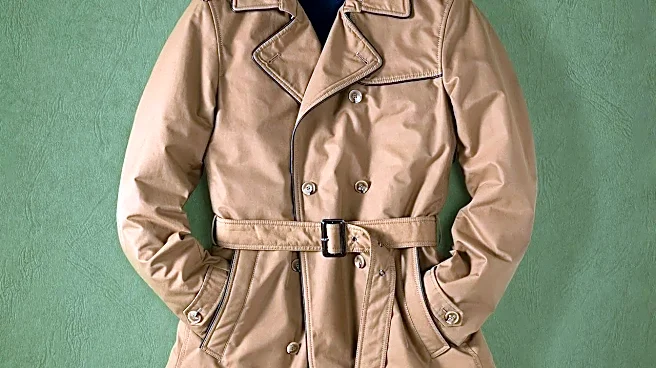
The storm flap is just one of many hyperstunctional details that have survived the trench coat's transition from military hardware to fashion icon. Those shoulder straps, or epaulets, weren't just for looks; they were used to display rank insignia and to secure gloves, whistles, or the straps of a gas mask. The D-rings on the belt, now mostly decorative, were originally used to hang equipment like map cases, swords, or even grenades. The straps on the cuffs could be cinched tight to stop wind and water from running up a soldier's arm when using binoculars. Even the deep back pleat, or vent, was designed to allow for freedom of movement while running or riding a horse. Nothing was arbitrary; every stitch had a purpose.