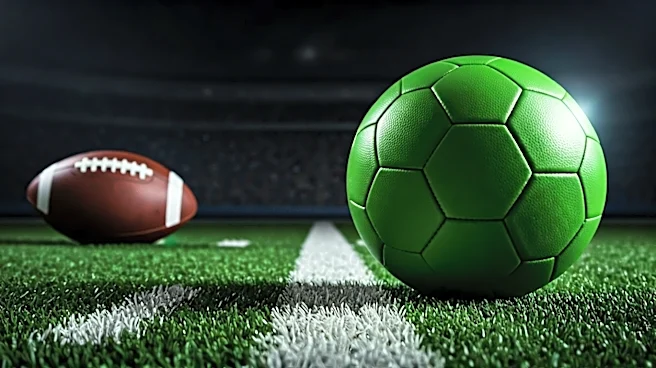








Myth: More Possession Means You’re Winning
In American football, time of possession is often a key indicator of dominance. If your team has the ball for 35 minutes, you’re controlling the clock, wearing down the defense, and keeping your opponent's star quarterback on the sideline. It’s a war
of attrition where holding the ball is a direct path to victory. Applying this logic to soccer is a classic mistake. A team can have 70% of the possession and still lose 2-0. This is often called “sterile domination”—plenty of the ball, but no cutting edge. The team might be passing it harmlessly around the middle of the field, unable to break down a disciplined, compact defense. The defending team is perfectly happy to let them keep it there, waiting for one misplaced pass to launch a devastating counter-attack. In soccer, it’s not *how much* possession you have, but *what you do with it* and *where on the field you have it*.
Reality: Possession Is Also a Defensive Weapon
Think of the four-minute offense in the NFL. The leading team gets the ball with just a few minutes left, and the goal is no longer to score a spectacular touchdown. The goal is to simply not give the ball back. Every first down is a dagger that bleeds the clock and crushes the opponent’s hope. This is a crucial function of possession in soccer, but it happens all game long. If your team has the ball, the other team cannot score. It's that simple. A deliberate, patient passing sequence that goes nowhere near the opponent’s goal isn’t necessarily a failed attack; it can be a defensive strategy. It allows your team to rest, get organized, and deny a dangerous opponent any chance to build momentum. It’s the strategic equivalent of kneeling the ball, but done for minutes at a time to control the game's tempo.
Myth: Backward Passes Are Pointless and Cowardly
An NFL quarterback who throws the ball backward is either executing a flea-flicker or has made a terrible mistake. The ball must always go forward. So, watching a soccer player turn and pass 30 yards back to their own goalkeeper can feel infuriatingly passive. It looks like a retreat. But it’s not a retreat; it’s a reset. Imagine a defense that has completely blanketed all of your receivers. A quarterback might throw the ball away to avoid a sack. A backward pass in soccer is a much better version of that. Instead of giving up the play, you’re recycling it. By passing backward, a team draws the opponent forward, pulling their defensive shape apart and creating new gaps to exploit. It’s a strategic retreat to launch a better-organized attack from a new angle. It’s like a basketball team passing the ball around the perimeter to find the open man, rather than forcing a bad shot into traffic.
Reality: The Goal Isn't Yards, It's Creating Space
The entire structure of football is built on the concept of gaining yards. Ten yards gets you a fresh set of downs. Moving from your 20-yard line to their 20-yard line is tangible progress. Soccer has no such measurement. Moving the ball 50 yards down the sideline might achieve nothing if the defense is perfectly set. The real currency in a soccer attack is space. The aim of possession is to manipulate the 11 defenders to open up a single, high-quality scoring opportunity. This might involve hundreds of passes that go sideways and backward, all designed to shift the defense a few feet to the left, which then opens up a lane on the right. It’s less like a ground-and-pound rushing attack and more like a chess master maneuvering pieces to set up a checkmate that’s five moves away. The final, killer pass may only travel 15 yards, but it’s the 30 passes before it that made it possible.