










The Allure of the Analog Giant
Before we get into the nautical nightmares, let's talk about why anyone would bother. Large-format photography uses sheet film, often 4x5 or even 8x10 inches in size, which is monumentally larger than a standard 35mm frame or digital sensor. This massive
negative captures breathtaking detail, subtle tonal gradations, and a sense of depth that feels almost three-dimensional. For a subject as vast and textured as the open ocean or the intricate details of a vessel, the appeal is obvious. The process is slow and deliberate; every single shot is a carefully considered artistic choice, from composition to exposure. It’s the photographic equivalent of choosing to build a ship in a bottle instead of just buying a toy boat.
A Camera Built for a Studio, Not a Storm
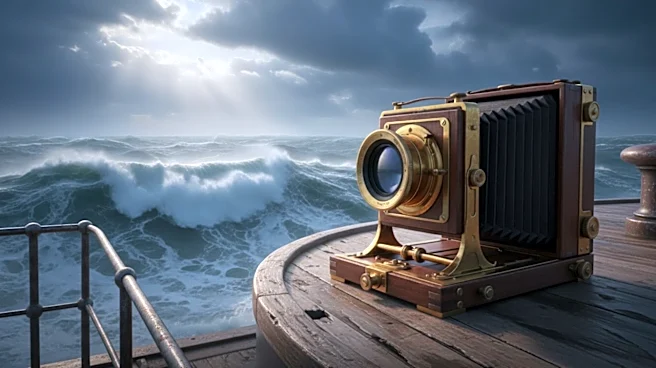
Large-format view cameras are marvels of engineering, but they were not designed for the high seas. They are bulky, heavy, and typically mounted on a sturdy tripod that’s meant for solid ground. On the constantly moving, vibrating deck of a ship, just achieving a stable, level shot is a monumental task. The slightest motion during a long exposure can ruin an image. Then there's the camera itself, often a delicate instrument with a flexible bellows connecting the lens to the film plane. This bellows is susceptible to wind, which can cause vibrations or even throw off the focus. Merely setting up the shot, which involves composing an upside-down and backward image on a ground glass screen under a dark cloth, becomes a chaotic ballet in the tight, often windy, confines of a ship.
The Unforgiving Elements: Salt and Water
A shipboard environment is actively hostile to photographic equipment and film. Salty sea air is notoriously corrosive to metal parts, and a view camera has plenty of exposed gears, rails, and knobs that can seize up or rust. Even more insidious is humidity. Film emulsion is a delicate layer of gelatin, and high humidity can cause it to swell, become tacky, or even allow the ink from the film's backing paper to transfer onto the image itself. This can cause spotting, discoloration, and other artifacts that render a photo useless. A photographer has to be constantly vigilant, storing film in moisture-protected packaging and allowing it to acclimate to temperature changes to prevent condensation. Every gust of spray is a potential disaster.
The Darkroom in a Closet
Perhaps the biggest logistical hurdle is handling the film itself. Each sheet of film must be loaded into a light-tight holder in complete darkness. On land, this is done in a dedicated darkroom. On a ship, it often means fumbling around inside a portable changing bag in a cramped cabin. After a sheet is exposed, it needs to be unloaded and stored for development, a process that must also happen in total darkness. If the photographer plans to develop the film onboard, they face even more challenges. Finding a space that can be made perfectly light-proof is difficult enough. Add to that the need to manage chemical baths—developer, stop bath, fixer—in a moving environment where spills are likely and consistent temperature control is a luxury. Systems like developing tanks can help, but they still require careful handling in tight quarters.
The Human Factor: Patience and Precision
Beyond the technical and environmental challenges lies the immense mental fortitude required. Each step in the large-format process is a potential point of failure. Forgetting to close the shutter before pulling the dark slide, a slight miscalculation in exposure, a light leak in a film holder—any of these can result in a lost image. When a single sheet of film is expensive and the opportunity for a shot may be fleeting, the stakes are incredibly high. Shipboard coverage adds layers of complexity: operations are often on a tight schedule with no chance for a do-over. Successfully creating a beautiful large-format image at sea is therefore not just a technical achievement; it's a testament to the photographer's unwavering patience, precision, and passion for their craft.