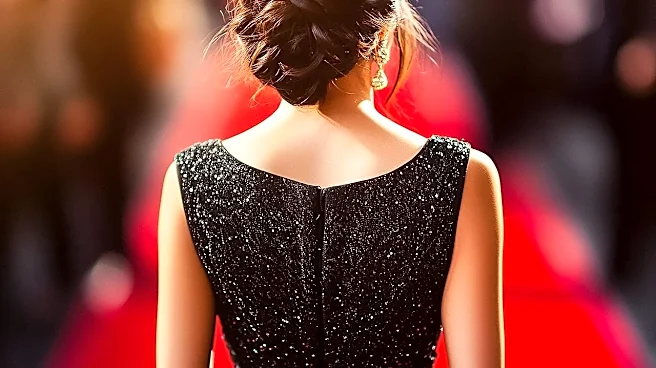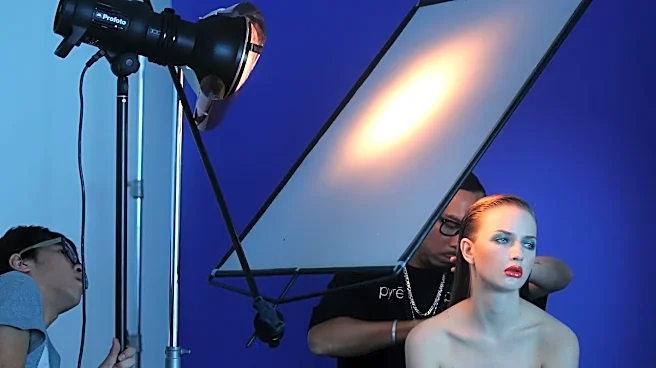



You see them on the red carpet: gravity-defying loops, architectural updos, and impossibly sleek shapes that look more like art than hair. But how do these sculptural styles survive a night of cameras, movement, and after-parties without collapsing?
The Blueprint and the Base
A
masterpiece hairstyle doesn’t start with a can of hairspray; it starts with a blueprint. Before a single pin is placed, stylists meticulously plan the look, often sketching it out. The success of these styles hinges on a flawless foundation. This begins with how the hair is prepared. Often, hair is not freshly washed, as day-old hair has more grit and texture, making it less slippery and easier to mold. If hair is washed, stylists use texturizing shampoos and mousses, then blow-dry them in—sometimes twice—to build a strong, supportive base. This initial prep work creates a canvas that is ready to be sculpted and will hold its shape far better than clean, silky strands.
Hidden Architectural Support
The true secret to many avant-garde and sculptural hairstyles is the invisible architecture hidden within. These are not just ponytails and buns; they are engineered structures. Stylists use a variety of non-hair materials to create the desired shape and volume. These can include foam padding (often called 'rats' or 'donuts'), wire mesh, or even custom-built lightweight cages that the natural hair is then styled over. For intricate updos, a secure base is often created by tightly braiding a section of hair close to the scalp, which then serves as an anchor point for pinning the larger structure. This internal scaffolding is what allows for the dramatic height and gravity-defying shapes that seem impossible to achieve with hair alone.
An Arsenal of Industrial-Strength Products
Forget your everyday flexible-hold spray. Securing a sculptural look requires an arsenal of high-performance products. Stylists rely on a technique called 'product layering'. It starts with texturizing sprays or powders applied at the root to create grip and volume. Then come the heavy lifters: strong-hold styling gels, thick pomades, and waxes that provide control and definition without flaking. Celebrity hairstylist Marc Mena notes that a strong finishing or 'freezing' spray is essential to lock everything down without making the hair look stiff or overworked. These products are applied in careful, deliberate layers to ensure every section is secured, creating a durable hold that can last for hours under bright lights and movement.
The Strategic Use of Pins and Pieces
No sculptural style would be complete without a formidable number of hairpins. But it’s not just about quantity; it’s about strategy. Stylists use different types of pins for different jobs: large U-shaped pins for securing buns and rolls, and small, tight bobby pins for locking down flyaways and intricate details. One professional trick is to spray the pins with hairspray before inserting them to give them extra grip. Furthermore, many of these stunning looks aren't created with just the model's natural hair. Clip-in extensions and full wigs are almost always used to add the necessary volume, length, and even color needed to achieve the look. These pieces are seamlessly integrated, allowing stylists to build shapes and sizes that would be otherwise impossible.
The Final Lock-In
Once the structure is built and every hair is in its place, the final step is the lock-in. This involves a final, thorough application of a maximum-hold hairspray. Stylists often spray from a distance to ensure an even coat that doesn't create wet spots or weigh the hair down. Some even use unconventional tricks, like wrapping a section with plastic wrap to tightly secure it while it sets. After the final spray, a shine serum or spray might be lightly misted over the top to catch the light and give the style a polished, camera-ready finish. This final seal ensures that from the moment the celebrity steps onto the carpet until the last photo is taken, their hair remains a flawless work of art.