









The Promise and the Peril
Talent feels like a superpower. From a young age, we are taught to celebrate it, nurture it, and expect great things from it. The child who can paint, the coder who sees solutions instantly, the salesperson who can charm anyone—they are given a label:
“the talented one.” This label starts as a gift, opening doors and creating opportunities. But that same label can slowly morph into a cage. The expectation to *always* be brilliant, to *always* win, to *always* deliver, creates a new, invisible opponent: the fear of not living up to the hype. What begins as a joyful expression of a natural skill becomes a high-stakes performance, with the applause feeling less like a celebration and more like a demand for an encore.
The Science of 'Choking'
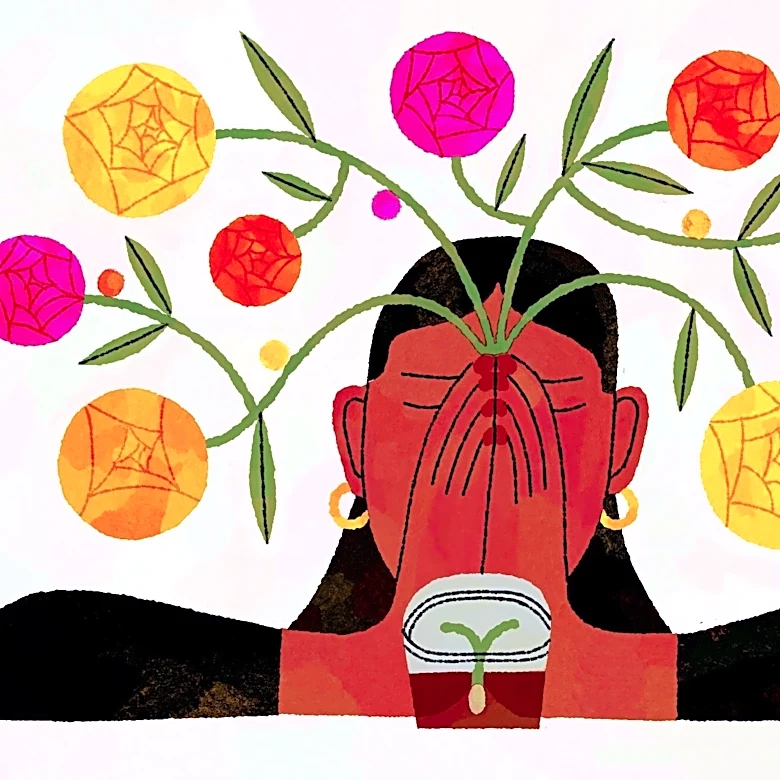
There’s a clear neurological reason this happens, a phenomenon psychologists call “choking under pressure.” It’s not a lack of skill or a failure of will. In fact, it’s the opposite: it’s the result of thinking too much. When you’ve mastered a skill, whether it’s shooting a free throw or giving a presentation, your actions become automated, controlled by the efficient, subconscious parts of your brain. Performance is fluid and effortless. But when pressure mounts, your brain’s prefrontal cortex—the part responsible for conscious, step-by-step thought—kicks into overdrive. You start actively thinking about the mechanics: “Keep my elbow in, follow through, bend my knees.” According to Sian Beilock, a leading expert on the topic, this “paralysis by analysis” disrupts the smooth, automatic process. By trying to consciously control a skill that should be unconscious, you effectively trip over your own feet.
Whose Expectations Are They, Anyway?
The pressure doesn’t just come from within. It’s beamed at us from every direction. For a young athlete, it’s the roar of the crowd and the hopes of their parents. In the modern workplace, it’s the manager who labels an employee a “rock star” and then piles on mission-critical projects, creating a scenario where a single stumble feels catastrophic. Social media amplifies this tenfold, creating a highlight reel culture where everyone is expected to project an image of effortless success. The line blurs between intrinsic motivation (the love of the activity itself) and extrinsic motivation (the desire for external rewards like praise, money, or status). When extrinsic pressures overwhelm the intrinsic joy, the activity ceases to be a passion and becomes a job—one with a very demanding boss.
Beyond the Obvious Arena
This dynamic isn’t limited to millionaire athletes or child prodigies. It plays out every day in classrooms, boardrooms, and family dinner tables across America. Think of the student from a family of doctors who feels immense pressure to get into medical school, even if their passion lies elsewhere. Or the first person in a family to go to college, carrying the hopes and dreams of generations on their shoulders. Even a positive reputation at work—“Sarah is the only one who can fix this”—can become a burden, creating a scenario where Sarah is afraid to ask for help or admit she’s overwhelmed, lest she tarnish her perfect record. The expectation of competence can ironically become the biggest obstacle to growth, as it discourages the very risk-taking and experimentation that builds skill in the first place.