



The Film That Nearly Broke Fellini
The film in question is 1954’s 'La Strada' ('The Road'), the haunting story of a simple young woman, Gelsomina, sold to a brutish traveling strongman named Zampanò. Today, it’s celebrated as one of the most influential films ever made, the winner of the very
first Academy Award for Best Foreign Language Film. But in the years leading up to its release, it was a passion project that seemed cursed. Fellini later called it his most autobiographical and representative film, the one he was most attached to, precisely because it was the hardest to make. Before 'La Strada', Fellini’s first solo directorial effort, 'The White Sheik', had been a box office disaster, leaving him in debt and with his career on thin ice. 'La Strada' was his shot at redemption, but it would demand more from him than any other film in his long career.
No Money, No Faith
The first major hurdle was money. Fellini and his co-writers shopped the script for 'La Strada' all over Italy, but no one wanted to touch it. In a post-war era dominated by gritty neorealism, producers found the script strange, bleak, and worst of all, uncommercial. They were also staunchly against Fellini's choice for the lead role of Gelsomina: his own wife, Giulietta Masina. Producers Dino De Laurentiis and Carlo Ponti finally agreed to provide financing, but on one condition: they wanted to cast De Laurentiis's wife, the famous actress Silvana Mangano, as Gelsomina. Fellini refused. Masina had been his inspiration for the character from the very beginning, and he wouldn't make the film without her. This standoff put the entire production in jeopardy before a single frame was shot.
Casting Chaos and a Hounding Director
With the producers reluctantly sticking by him, Fellini turned to casting the brutish Zampanò. He initially wanted to cast a real circus strongman but couldn't find the right fit. His sights then landed on Anthony Quinn, an American actor working in Rome at the time. When Fellini cornered him and declared he'd found his Zampanò, Quinn thought the director was “a little bit crazy” and repeatedly turned him down. It wasn't until Ingrid Bergman and Roberto Rossellini sat Quinn down to watch Fellini’s previous film, 'I Vitelloni', that the actor was convinced. “I was thunderstruck by it,” Quinn later recalled, realizing the man hounding him was a genius. Even with the cast in place, the producers' faith in Masina was so low that they didn't even give her a contract until after filming had begun and executives from the American distributor, Paramount, praised her performance in the early footage.
A Breakdown on 'The Road'
The shoot itself was grueling. Production was delayed when Masina dislocated her ankle, giving producers another chance to try and replace her. The atmosphere was tense, and the weight of the film, which Fellini described as a “dangerous representation of my identity,” took its toll. He poured so much of himself into the 600-page script and the meticulous details of the production that his energy eventually gave out. Just before shooting was complete, Federico Fellini suffered a serious nervous breakdown and had to be treated by a psychoanalyst before he could finish the film. The project that was meant to be his artistic salvation had physically and mentally shattered him.
From Brawl to Oscar Glory
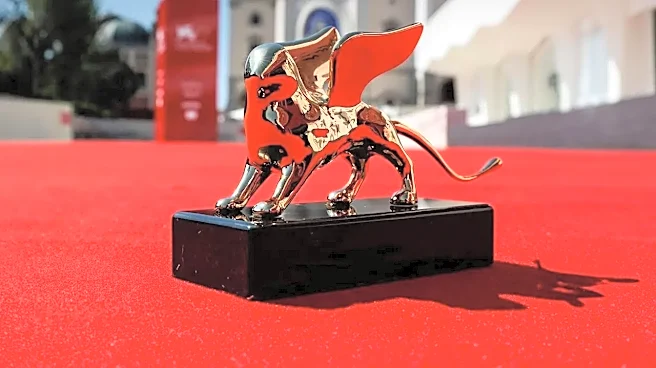
When 'La Strada' finally premiered at the 1954 Venice Film Festival, the drama wasn't over. The initial critical reaction was harsh. Many Italian critics, especially those aligned with the neorealist and Marxist movements, saw the film's spiritual and fable-like quality as a betrayal of cinema's social duty. The screening descended into a bitter controversy that reportedly escalated into a public brawl between Fellini's supporters and his detractors. The festival jury, caught between political factions, awarded the film the second-place Silver Lion. Yet, despite the hostile debut in its home country, 'La Strada' went on to win over 50 international awards, culminating in its 1957 Oscar win. The film was a massive financial success and became a global phenomenon, vindicating Fellini's unique vision.