
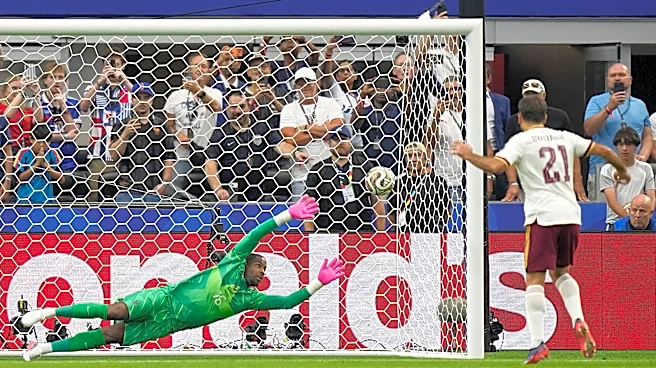


The Team Game Ends, The Duel Begins
For two hours, eleven players work as a single organism, a complex system of passing, defending, and attacking. Then, the final whistle of extra time blows, and all of that intricate teamwork becomes irrelevant. The penalty shootout is a different sport
entirely. The rules are brutally simple: each team selects five players to take a shot from the penalty mark, 12 yards from the goal, against only the opposing goalkeeper. If the score is tied after five kicks each, it goes to a sudden-death format. The rest of the players, their arms linked on the halfway line, become what they were just moments before: spectators. The collective struggle for dominance is over; now, it’s a string of individual battles of nerve.
The Longest Walk in Sports
The walk from the center circle to the penalty spot is often described as the loneliest in sports. All the pressure of a nation rests on the kicker's shoulders. The psychology here is fascinating and cruel. Research shows players who take more than a second to compose themselves after placing the ball have an 80% success rate, while those who rush it score only 58% of the time. This is the battleground of “loss aversion,” a psychological concept that says the fear of pain is a more powerful motivator than the pursuit of pleasure. When a player has a kick to win the match, they convert an astonishing 92% of the time. But if missing that kick means their team is eliminated, the success rate plummets to below 60%. The fear of becoming the scapegoat—the player whose miss will be replayed for decades—is a tangible force that can paralyze even the most skilled athletes.
The Goalkeeper’s Gambit
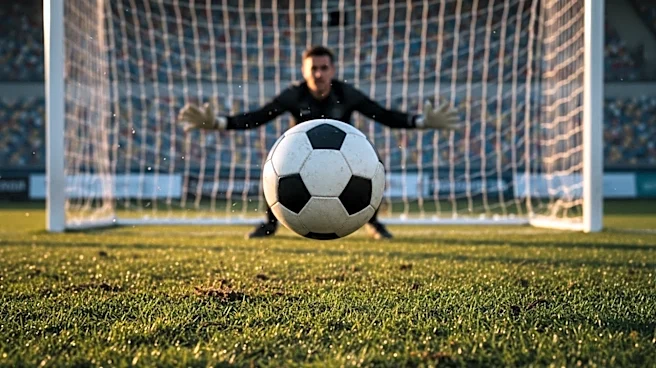
While the kicker is expected to score, the goalkeeper is expected to fail. A ball shot from 12 yards can reach the goal in 400 milliseconds, faster than a human can react. This means the keeper has to guess. And yet, this is their moment to become a national hero. They aren’t just passive targets; they are active participants in psychological warfare. Keepers will wave their arms, shift along the line, and stare down the kicker to disrupt their focus. Some will stand slightly off-center, baiting the kicker into aiming for the larger, more inviting side of the goal—a space the keeper is already preparing to dive toward. Interestingly, studies show that a keeper’s best strategy might be to do nothing at all. Due to an “action bias,” or the instinct to do something, 98% of keepers dive. Yet those who stand still have a significantly higher save percentage, catching kickers who aim for the middle.
A Game of Chance or Strategy?
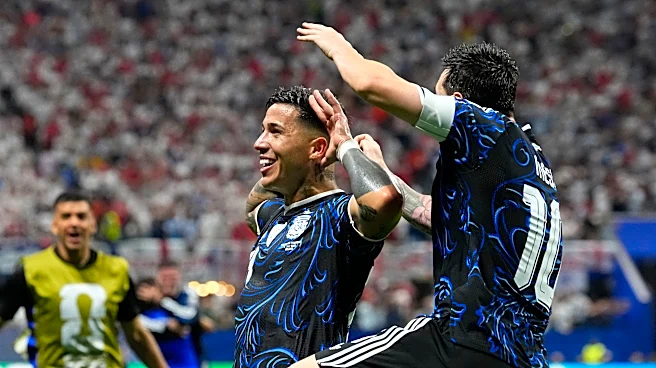
For all the individual skill involved, many still see the shootout as a lottery, a cruel coin flip to decide a champion. There’s some truth to that view. The team that shoots first wins about 60% of the time, simply because the team shooting second is under constant pressure to equalize. Yet the shootout, first adopted by FIFA in 1970, was designed as a solution to even worse alternatives, like replaying matches or, in some cases, literally tossing a coin to decide a winner. As we’ve seen in this 2026 World Cup, with underdogs like Paraguay and Morocco knocking out giants Germany and the Netherlands on penalties, the shootout is a crucible. It's a high-stakes test of technique under extreme mental duress, where preparation and nerve are just as important as the ability to kick a ball.