





The Trend vs. The Technique
First, let's separate the viral trend from the foundational technique. Social media algorithms reward bold, easily replicated looks. This gives rise to one-size-fits-all 'hacks'—like drawing a straight line across your Cupid's bow or using liner only
in the center. These trends are designed for maximum visual impact in a 15-second video, not necessarily for real-life wear on every face shape. Professional makeup artists, on the other hand, aren't just following trends; they're practicing the art of illusion. Their goal isn't to make everyone look the same but to enhance or correct an individual's features. The disagreement you see isn't about one tip being 'right' and another 'wrong.' It's a fundamental difference in philosophy: are you applying a popular look, or are you customizing a shape for a unique face?
Fullness vs. Shape: The Two Goals
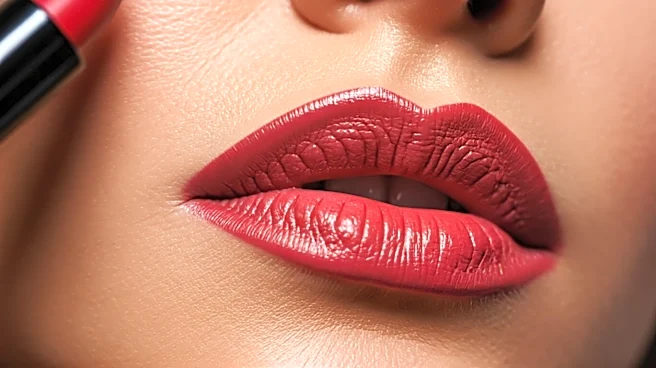
At the heart of the debate are two different end goals: creating the illusion of overall volume (fullness) or refining the lip's silhouette (shape). An artist aiming for a pillowy, pouty effect might be more aggressive with their overlining, especially at the center of the lips. They prioritize making the lips look bigger, even if it slightly sacrifices the natural contour. Think of the modern, bee-stung look popularized by social media influencers. In contrast, an artist focused on perfecting a client's natural shape might use overlining more sparingly. Their goal could be to balance an uneven lip, add definition to a faint border, or lift the corners for a more cheerful expression. This approach is about subtle correction, not dramatic augmentation. So when you see one artist telling you to go big and another telling you to stay close to the line, they're simply working toward different outcomes.
The Great Cupid's Bow Controversy
Nowhere is the disagreement more obvious than at the Cupid's bow. One camp advises softening or even erasing it entirely, connecting the two peaks with a straighter or gently curved line. This technique creates a rounder, fuller, and more doll-like upper lip. It’s a very specific aesthetic that can dramatically alter the face's overall harmony. The opposing camp argues for preserving and defining the Cupid's bow. These artists believe the double-curve is a key feature of a natural lip and that sharpening it maintains structure and sophistication. They might use a lighter pencil or a touch of highlighter on the peaks to make them pop. The choice here isn't arbitrary. Erasing the Cupid's bow can shorten the philtrum (the space between your nose and upper lip), which can look great on some people but create an imbalance on others. It all comes down to facial anatomy.
Where to Draw the Line (Literally)
Another major point of contention is exactly where and how much to overline. The conservative advice is to only trace just outside the 'vermilion border,' the pale outline that surrounds your natural lips. The logic is that this is the most believable place to add fullness without looking obvious. Then there’s the school of thought, popularized by artists like Mario Dedivanovic, that you should only overline the center of the bottom lip and the Cupid’s bow, keeping the liner strictly on the natural lip line as you move toward the corners. This technique avoids the dreaded 'clown mouth' effect, where overdrawn corners can drag the mouth down. The disagreement here is rooted in how light and shadow work. Overlining the entire mouth can look flat and artificial in person, whereas central overlining creates a 3D effect by concentrating fullness where light would naturally hit.
The Unifying Secret: It’s All About the Blend
Despite all the conflicting advice on where to place your liner, there's one thing every single makeup artist agrees on: the magic isn't in the line itself, but in the seamless blend. A stark, unblended line of pencil around your mouth will always look harsh and artificial, no matter which technique you use. The illusion of fuller lips is created by making the overdrawn area look like a natural part of your lip. This is achieved by using the liner to create a 'shadow' and then filling the entire lip with a lipstick or gloss. Some artists take it a step further, using multiple shades—a slightly darker liner, a primary lipstick, and a lighter shade or gloss in the center—to create a dimensional gradient. This is the great unifier. Whichever overlining map you choose to follow, your look will only be as believable as your blend.