




The Original Sin of Ambition
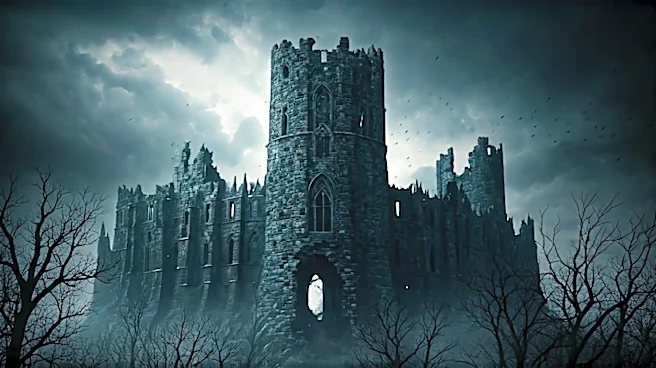
To understand Harrenhal, you have to start with the man who built it: Harren the Black. King of the Isles and the Rivers, Harren was a tyrant who wanted to cement his legacy in stone. He spent forty years and countless lives building the largest castle
Westeros had ever seen, boasting five colossal towers and walls thick enough to repel any army. On the very day it was completed, Aegon Targaryen and his sisters arrived in Westeros. Harren, blinded by the hubris of his supposedly impregnable fortress, defied the invaders. He famously declared, “Stone does not burn.” Aegon’s response was simple: “When the sun sets, your line shall end.” He unleashed his dragon, Balerion the Black Dread, whose fiery breath was so hot it melted Harrenhal’s towers like candles. Harren and his sons were cooked alive inside their own monument to arrogance. This act wasn’t just a military victory; it was a foundational myth. Harrenhal became the ultimate symbol of old power being rendered obsolete by a new, terrifying force. Its very existence is a testament to the idea that no wall is high enough to protect you from the future.
A Prize That Kills the Winner
After Harren’s fall, the castle was not abandoned. Instead, it became a cursed prize, a poisoned chalice passed from one doomed house to the next. Its lordship became a fast track to extinction. The first to hold it after Aegon’s Conquest, House Qoherys, died out within a generation. House Harroway followed, only to be entirely extinguished by King Maegor the Cruel. Later, House Strong rose to prominence there, only to be consumed by fire and betrayal during the Dance of the Dragons, as seen in *House of the Dragon*. Larys Strong, the club-footed schemer, becomes a fitting lord for a broken castle. Then came House Lothston, whose descent into madness and dark magic gave Harrenhal its reputation for being literally haunted. Finally, House Whent, who were the lords when Robert’s Rebellion began. By the time of *Game of Thrones*, the Whent line is all but extinct. The castle isn’t just haunted by ghosts; it’s haunted by the ghosts of failed dynasties. Owning Harrenhal is like winning a jackpot where the prize is a target on your back. It’s a narrative shortcut for showing a house is either overreaching or already doomed.
The Stage for Pivotal History
George R.R. Martin doesn’t just use Harrenhal as a spooky backdrop; he uses it as a stage for Westeros’ most critical turning points. The Great Council of 101 AC, which set the precedent for male-preference primogeniture and sowed the seeds of the Dance of the Dragons, was held in its massive halls. Over a century later, the infamous Tourney at Harrenhal set the stage for Robert's Rebellion. It was here that Rhaegar Targaryen publicly snubbed his wife, Elia Martell, to crown Lyanna Stark the queen of love and beauty, an act that lit the fuse for a kingdom-shattering war. In the War of the Five Kings, it serves as a revolving door of misery—a Lannister torture chamber under Amory Lorch and the Mountain, a brief bastion for Robb Stark’s forces, and a temporary fiefdom for Roose Bolton. By placing these events at Harrenhal, the story constantly reminds us of the themes the castle embodies: broken oaths, fleeting power, and the ghosts of past decisions influencing the present.
A Mirror for Character and Power
Harrenhal functions as a perfect mirror, reflecting the true nature of anyone who occupies it. When Tywin Lannister takes it, he doesn’t try to rebuild. He uses its grim, broken state as a headquarters, reflecting his own ruthless pragmatism. It becomes a place of suffering, perfectly aligning with his philosophy of rule through fear. For Arya Stark, Harrenhal is a crucible. As a servant, she sees the horror of war from the ground up, witnessing torture and death that harden her into the assassin she becomes. Her escape from it is a pivotal moment in her loss of innocence. Perhaps most tellingly, Petyr “Littlefinger” Baelish is granted lordship of Harrenhal for his political maneuvering. For a man with no army and no ancient name, gaining the largest (if most ruined) castle in the realm is the ultimate status symbol. It represents the peak of his social climbing, but it’s an empty prize. He barely sets foot in it. Like Harren, Littlefinger’s ambition is vast, but his foundation is unstable, and the prize he covets is ultimately a hollow ruin, a symbol of power rather than power itself.