





The Set-Piece Spotlight
When two elite teams are deadlocked, unable to break each other down in open play, the set piece becomes king. A corner kick or a deep free kick suddenly feels like a penalty shootout before its time—a golden opportunity to snatch a victory. The numbers
from recent World Cups are staggering: roughly one in every five goals scored in the knockout stages comes from a set piece. Think back to the 2018 World Cup semifinal, where France's Samuel Umtiti scored the match's only goal with a header from a corner to defeat Belgium and punch a ticket to the final. In games decided by the thinnest of margins, a well-placed delivery and a brave header aren't just a strategy; they're often the entire story.
A Modern Tactical Arms Race
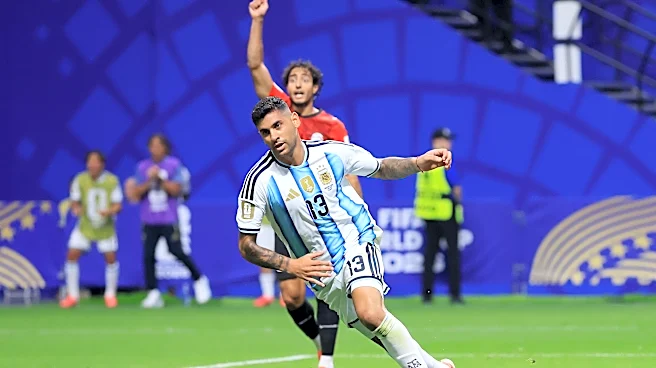
This isn't a happy accident; it's a calculated tactical evolution. Top international teams now employ specialized set-piece coaches, drilling players on orchestrated movements, blocks, and deliveries designed to create a single, perfect chance. We're seeing the results play out in real time. In the 2026 World Cup Round of 16, it was Cristian Romero's header that started Argentina's comeback against Egypt. Just a day earlier, Portugal’s Gonçalo Ramos broke Croatian hearts with a stoppage-time header to win the match. These aren't just moments of individual brilliance. They are the culmination of a coaching philosophy that recognizes that in knockout football, controlling the airspace is as critical as controlling the midfield.
The Defensive No-Fly Zone
Of course, aerial dominance is a two-way street. For every attacker trying to score a decisive header, there’s a defender whose entire job is to make sure it doesn't happen. A center-back who commands their own penalty area is arguably more valuable than a goal-scoring forward in these tight matches. Players like the Netherlands' Virgil van Dijk have built careers on being aerial fortresses, winning duel after duel to clear dangerous crosses and relieve suffocating pressure. Winning a defensive header doesn't just stop one attack; it demoralizes the opponent and sends a clear message: the airspace is closed for business. Statistical analyses have shown a direct correlation between winning the majority of aerial duels and winning the match itself, proving that a good defense is often a high-flying one.
The 'Plan B' Game Changer
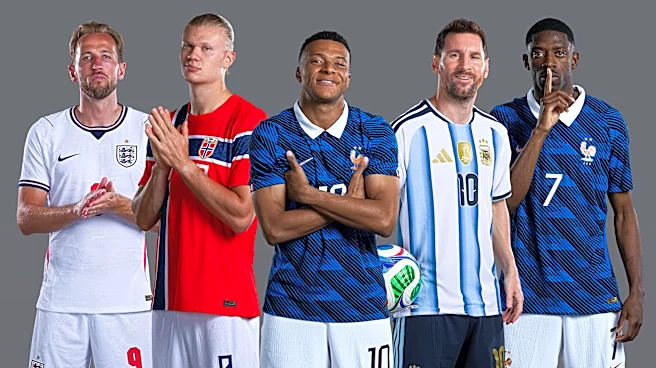
Beyond set pieces, aerial command offers a powerful tactical alternative when a team is chasing a game. When slick passing combinations fail, the 'Plan B' of launching long balls toward a dominant striker becomes a vital tool. A target forward like England's Harry Kane or Norway's Erling Haaland, both recognized as elite headers, can completely change the dynamic of a match. They become a physical focal point, challenging defenders, winning flick-ons for teammates, and creating chaos in the box. This tactic might lack the artistic flair of a 30-pass goal, but when your tournament life is on the line in the final ten minutes, effectiveness trumps elegance every single time. It's a direct, brute-force strategy that has saved countless teams from the brink of elimination.