





The World Cup Aftermath
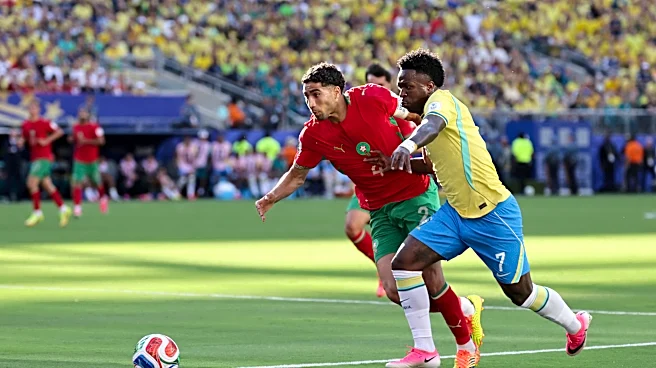
Let’s rewind the tape. At the 2022 World Cup in Qatar, Morocco became the first African and Arab nation to ever reach the semifinals. They weren’t just winning; they were doing it with style, defensive grit, and a passionate fanbase that turned every
stadium into a home game. They toppled giants like Spain and Portugal, playing with a collective spirit that was impossible not to root for. They were the underdog story of the tournament. But fairy tales end, and the real world of international soccer is unforgiving. The team’s next major test, the 2023 Africa Cup of Nations (held in early 2024), was supposed to be a victory lap. Instead, it was a reality check. Heavily favored, Morocco crashed out in the Round of 16 against South Africa. The loss instantly framed the question everyone was quietly asking: Was the World Cup a beautiful fluke?
The Stars You Know Are Still Here
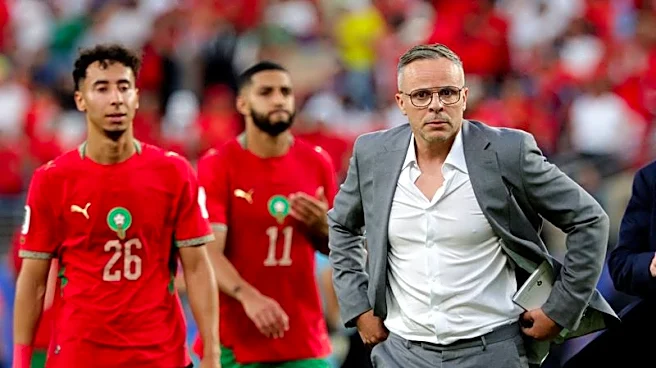
The good news for anyone who got invested in 2022 is that the core of that beloved team is still intact. Achraf Hakimi, the world-class wingback from Paris Saint-Germain, remains the team's engine and emotional leader. Hakim Ziyech, the mercurial winger with a wand of a left foot, is still the primary creative force. Sofyan Amrabat, the tireless midfielder who seemingly covered every blade of grass in Qatar, continues to anchor the team's spine. And Yassine Bounou, or “Bono,” the heroic goalkeeper whose saves mesmerized the world, is still the last line of defense. This continuity is huge. It means the chemistry and tactical foundation that made them so tough to beat haven't disappeared. The challenge for coach Walid Regragui is to reignite that same lightning in a bottle, proving their system works beyond a single, magical tournament.
New Blood and Big Ambitions
A national team can’t just rely on the past; it has to build for the future. And Morocco is making major moves. The biggest headline-grabber is Brahim Díaz, a gifted attacking midfielder who plays for Real Madrid. After representing Spain at the youth level, Díaz officially chose to play for Morocco in 2024, a massive recruiting coup that adds elite creativity to their attack. He’s exactly the kind of player who can unlock stubborn defenses and take pressure off Ziyech. Beyond Díaz, the program’s success has made it an attractive destination for dual-national players across Europe. This influx of talent signals that the 2022 run wasn't just a moment, but a catalyst. It raised the program's profile, attracting a new generation of players who want to be part of the next chapter.
The Ultimate Home-Field Advantage
This is where the prove-it arc finds its ultimate stage. Morocco isn’t just waiting for the next World Cup; they are bringing the world to them. First, they will host the 2025 Africa Cup of Nations. After the disappointment of the 2023 tournament, the pressure to win the continental trophy on home soil will be immense. It is their single biggest test before the next World Cup and their best chance to make a definitive statement. And the grand finale? Morocco will co-host the 2030 FIFA World Cup alongside Spain and Portugal. This is a generational opportunity. Hosting the tournament guarantees them a spot and provides a decade-long project to build a team capable of competing at the highest level. The entire national project is now geared toward that moment, turning the pressure into a powerful, unifying goal.