








The Ocean Is a Main Character
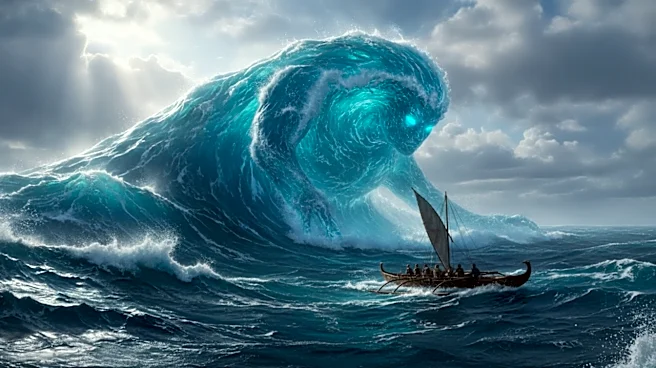
In the 2016 animated classic, the Pacific Ocean isn't just the setting; it’s a sentient, supporting character with a personality. It playfully interacts with Moana as a toddler, guides her on her quest, and even high-fives her. Animators described using
a 'sock puppet' approach to give it form and emotion before the effects team made it look like water. This personification is central to the story's magic. The ocean chooses Moana, protects her, and acts as her most loyal companion. Without its playful nudges and dramatic interventions, the narrative loses a significant piece of its heart. The challenge for director Thomas Kail, a Tony-winner known for 'Hamilton,' is translating this whimsical, animated personality into a photorealistic world without it looking bizarre or, worse, losing its charm entirely.
The Uncanny Valley of Water
CGI water is notoriously difficult to perfect. Audiences intuitively know what water looks like and how it behaves, making any imperfections glaringly obvious. The technical challenge involves complex fluid dynamics simulations, light refraction, caustics, bubbles, and foam. But 'Moana' has a higher bar to clear than simple realism. The live-action ocean must be capable of expressing intent and emotion. When should it look like normal, physics-driven water, and when should it behave like a character? If it's constantly forming water-tentacles, it risks looking silly. If it’s too subtle, its entire role in the story is diminished. This is the tightrope walk. The production needs a defined set of rules—a visual playbook—that governs precisely how and when the ocean's 'personality' manifests. Without this consistency, the film's most important supporting character could drown in a sea of unconvincing special effects.
Learning from Pandora's Playbook
For a masterclass in building a world with visual rules, look no further than 'Avatar: The Way of Water.' James Cameron and his team didn't just create realistic water; they created an entire aquatic ecosystem with its own logic. The visual effects team at Wētā FX developed a whole new toolset to handle the complexity, running simulations for over 2,225 water shots. They studied how water interacts with skin, hair, and movement to ensure every interaction felt authentic. This obsessive attention to detail created a world that felt tangible and believable, even with nine-foot-tall blue aliens. The key takeaway for 'Moana' isn't just the technological achievement, but the commitment to establishing a consistent reality. Cameron's team essentially wrote the rulebook for Pandora's oceans before they shot a single frame. This is the level of foundational work the 'Moana' production must undertake.
What the 'Moana' Rulebook Needs
So, what would this visual rulebook for 'Moana' contain? First, it would define the ocean's modes of expression. Perhaps its personality only emerges through the behavior of waves and currents, rather than fully-formed water arms. Second, it needs rules for interaction. The ocean's touch should feel distinct—playful with a young Moana, forceful during a storm, gentle in moments of guidance. Third, the filmmakers must establish clear triggers for its intervention. The animated ocean often helps only after Moana has tried and failed on her own, a crucial element for her character development that needs to be preserved. Finally, the visual texture must communicate its mood—is it sparkling and inviting, or dark and menacing? By defining these rules, director Thomas Kail and his team can ensure the ocean remains a consistent, believable, and vital character, allowing new star Catherine Laga'ia's Moana to have a credible partner in her journey across the sea.