








Not Your Cousin's Origin Story
Forget everything you think you know about Supergirl. The upcoming film, based on Tom King and Bilquis Evely’s brilliant comic series, isn’t another story about a perky alien trying to fit in at a Smallville high school. This Kara Zor-El is a disillusioned
woman on her 21st birthday, drinking in an alien dive bar, questioning her purpose. She isn't a newcomer to hardship; she's a veteran of it. Unlike her cousin Kal-El, who was a baby when Krypton exploded and landed in the loving arms of the Kents, Kara was a teenager. She watched her world die. She then spent years stranded on a chunk of Krypton under a red sun, which meant she had no powers and had to fight to survive. This isn't a story about finding a home on Earth. It's about a woman haunted by the home she lost and the brutal journey she endured long before she ever met Superman.
The Engine of Trauma and Rage
This is where the story’s true power—and the DCU's biggest challenge—lies. The comic’s emotional engine isn't Kara’s struggle to control her heat vision; it's the unprocessed trauma of her youth. The narrative is propelled by her memories of Krypton's sterile beauty, its violent end, and the bleak, dog-eat-dog reality of her subsequent survival. This past informs her worldview, her cynicism, and her capacity for a very specific, righteous anger. While Superman represents hope found, this Supergirl embodies resilience forged in fire. Her alien childhood isn’t a footnote in her origin; it *is* the origin of her character. The entire plot of *Woman of Tomorrow* kicks off when a young alien girl seeks Kara’s help for a quest of revenge, specifically choosing her over Superman because she knows Kara, having lost everything herself, will understand a rage that Kal-El never could.
A Welcome Break from Past Portrayals
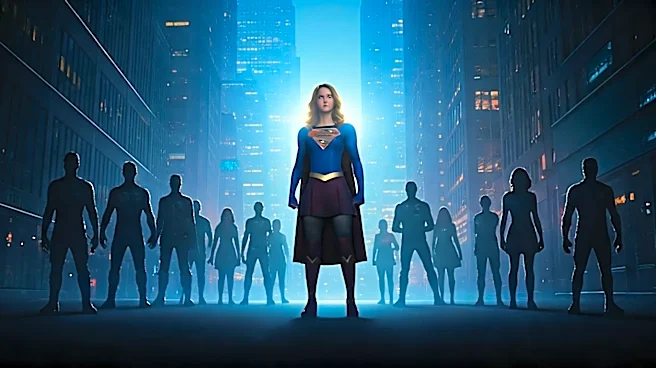
This vision of Supergirl is a stark departure from previous live-action versions. The 1984 film presented a naive, almost childlike Kara. The CW's long-running series, while beloved, centered its hero on an optimistic, Earth-centric journey of self-discovery, often mirroring her cousin's path. *Woman of Tomorrow* rejects that mold entirely. It posits that Kara is not, and should never be, a female version of Superman. Her experiences make her fundamentally different. She is harder, more world-weary, and arguably more dangerous because she has a deeper understanding of loss. This is why the casting of Milly Alcock, known for her portrayal of the fierce and complex Rhaenyra Targaryen in *House of the Dragon*, feels so perfect. Alcock has already proven she can embody a character who carries the weight of a broken world on her shoulders, balancing grace with barely contained fury.
The DCU's Ultimate Litmus Test
Ultimately, adapting this story faithfully is the ultimate litmus test for Gunn’s new DCU. The previous DCEU was often criticized for its superficial treatment of character motivation, prioritizing spectacle over substance. If *Supergirl: Woman of Tomorrow* gets watered down into a generic action flick, it will signal that nothing has really changed. But if the film truly leans into the darkness of Kara’s past—if it has the courage to make its hero a product of cosmic trauma and righteous anger—it will prove the new DCU is capable of the kind of sophisticated, emotionally resonant storytelling that has defined its best comics for decades. Can the DCU build a blockbuster around a hero whose defining feature isn’t her power, but her pain? The success of this single film could answer that question for the entire franchise.