







The Terminator Who Wasn't Supposed to Be
Imagine 'The Terminator' without Arnold Schwarzenegger. In the early 80s, the studio, Orion Pictures, did. They wanted him for the hero, Kyle Reese. The idea of a 6'2" Austrian bodybuilder with a thick accent playing the film's relentless villain seemed
absurd. Cameron himself originally envisioned the Terminator as an everyman who could blend into a crowd, with Lance Henriksen being his initial concept. But during a lunch meeting, Cameron was struck not by Schwarzenegger's fit for the hero, but by how he talked about the villain—how the machine should move, think, and operate. The director saw past the resume and the accent, realizing that Arnold's imposing, almost inhuman physique was the key. He wasn't a man who could blend in; he was a walking nightmare, a vision that redefined the character and created a pop culture icon, much to the initial confusion of executives.
The Titanic Stars the Studio Didn't Want
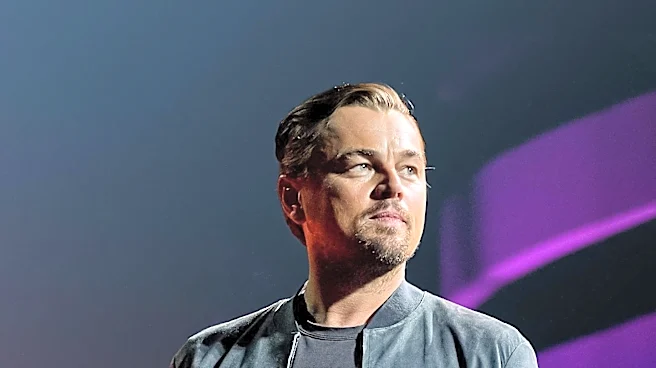
When casting the biggest movie of its time, the studio wanted megastars. For Jack Dawson in 'Titanic', the consensus favorite was Matthew McConaughey, who even had a charming screen test with Kate Winslet. But Cameron had his sights set on a younger, more fledgling actor: Leonardo DiCaprio. The director felt DiCaprio possessed the boyish vulnerability the part needed, a quality that an established star like McConaughey, with his inherent confidence, might lack. Cameron even had to essentially force DiCaprio to do a proper screen test, telling him the part was his to lose. When DiCaprio finally read with Winslet, Cameron knew he'd found his Jack. For Rose, Cameron was lobbied hard by Winslet herself, who sent him a single rose with a note that read, 'I'm your Rose'. While the studio might have preferred a more established name, Cameron was won over by her persistence and talent, a decision that created one of cinema's most iconic pairings.
Banking on an Unknown for 'Avatar'
For 'Avatar', a film with an astronomical budget, the pressure to cast a bankable star was immense. The studio pushed for names like Matt Damon or Channing Tatum to play Jake Sully. Cameron, however, was adamant about finding an actor without a famous persona that could distract from the immersive world of Pandora. His search led him to Sam Worthington, a then-unknown Australian actor who was reportedly living out of his car at the time. The studio was deeply reluctant. But Cameron saw a quality in Worthington's audition that convinced him he'd found his lead. As Cameron put it, Worthington was someone he'd 'follow into battle'. He fought for his choice, believing an unknown face would allow audiences to fully connect with Sully's journey. The resulting film became the highest-grossing movie of all time, a record built on a lead actor the studio never wanted.
The Cameron Casting Philosophy
Time and again, James Cameron's choices highlight a philosophy that runs counter to conventional Hollywood wisdom. He isn't casting a name; he's casting an essence. He famously says that casting is a 'mystical process' and that the right actor should bring something unexpected that elevates the character beyond the page. He looks for an internal quality that matches the character's soul, whether it's Schwarzenegger's machine-like presence, DiCaprio's youthful romanticism, or Worthington's grounded everyman appeal. It's a high-stakes game of instinct over analytics, vision over celebrity status. Executives see balance sheets and marketing potential; Cameron sees the final frame. He looks for actors who don't just play the part, but embody it so completely that audiences can't imagine anyone else in the role.