



The Bridge Burned in Manchester
It all began with an interview. In November 2022, on the eve of the World Cup, Cristiano Ronaldo sat down with Piers Morgan and effectively set fire to his relationship with Manchester United. He claimed he felt "betrayed" by the club, had no respect
for manager Erik ten Hag, and criticized the club's ownership and younger players. For a player whose brand was built on professionalism and elite standards, it was a stunning act of public rebellion. The fallout was swift and absolute. Days later, on November 22, Manchester United announced that Ronaldo would be leaving the club by "mutual agreement" and with "immediate effect." His second coming at Old Trafford, which had begun with such fanfare, ended not with a trophy, but with a terminated contract. The dream return had curdled into a bitter divorce, leaving one of the club's greatest legends an outcast.
A World Cup Dream Unravels
The World Cup in Qatar was supposed to be the perfect antidote—a final, glorious campaign to win the one major trophy that had eluded him. Instead, it became the stage for the next act of his public unraveling. After a solid start, Ronaldo's frustration became palpable. His reaction to being substituted against South Korea was criticized by his own manager, Fernando Santos. What happened next was unthinkable. For the crucial Round of 16 match against Switzerland, Ronaldo, the team's captain and all-time leading scorer, was benched. His replacement, Gonçalo Ramos, scored a hat-trick in a dazzling 6-1 victory, and suddenly Portugal looked more fluid and dangerous without their talisman. The tactical decision was vindicated, and Ronaldo's role was permanently diminished. He was no longer the indispensable hero, but a substitute for a team that seemed ready to move on.
The Solitary Walk in Tears
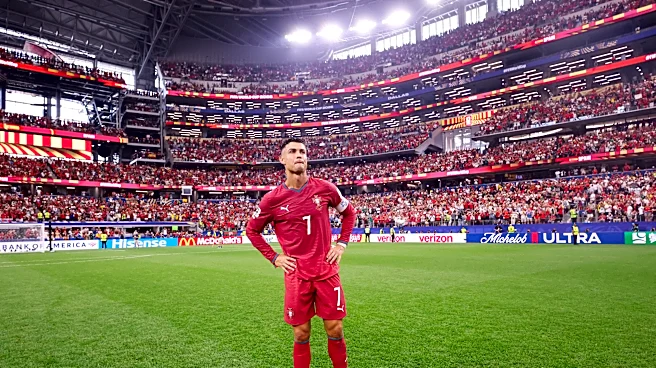
The final image of Cristiano Ronaldo at what was likely his last World Cup is the one that truly defines the 'unfinished' feeling. After Portugal's shocking 1-0 quarter-final loss to Morocco, a game in which he again started on the bench, the cameras followed him. He didn't linger on the pitch or console his teammates. He walked straight down the tunnel, alone, head bowed, and weeping. It was a profoundly human moment, but also a deeply unsatisfying one. Legends are supposed to go out on their shield, in a blaze of glory or a hard-fought defeat. Ronaldo's World Cup story ended with him as a peripheral figure, watching his dream die from the sidelines before making a solitary, tearful exit. There was no final heroic effort, no iconic last stand, just the quiet sorrow of an ending he never would have written for himself.
An Epilogue in the Desert
A few weeks later, in late December 2022, Ronaldo's next move was announced: a record-breaking contract with Al Nassr in Saudi Arabia. While a lucrative new chapter, it felt like an epilogue rather than a continuation of the main story. For a player who had dominated the Champions League and Europe's top leagues for nearly two decades, the move to a less competitive league felt like an admission that his time at the absolute pinnacle was over. It cemented the events of late 2022 not as a temporary setback, but as a definitive conclusion to his era of European dominance. The narrative had been broken. The player who lived for the biggest stage had abruptly left it, not after one last triumph, but after a self-inflicted club exit and a World Cup whimper.