


1. Alexander McQueen
The original master of dark, romantic drama, Alexander McQueen's legacy is rooted in a deep understanding of historical tailoring, which he famously subverted. His training on Savile Row gave him the technical skill to create exquisitely structured jackets
and coats that felt both beautiful and brutal. From the infamous low-rise "Bumster" trousers to frock coats that sculpted the body into an aggressive, powerful form, McQueen's work is a masterclass in theatrical villainy. The house, now under Seán McGirr, continues to explore this heritage, blending subversive strength with incisive tailoring for a new generation.
2. Saint Laurent
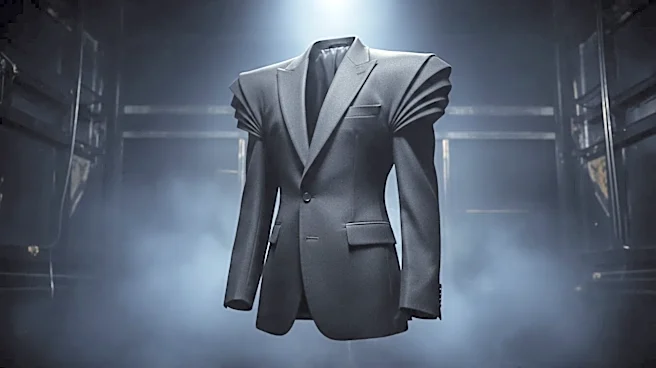
Under Anthony Vaccarello, Saint Laurent has become the uniform for the nocturnal, high-finance antagonist. The look is defined by its sharpness: exaggerated, structured shoulders on blazers, razor-cut leather jackets, and a sleek, almost severe silhouette. Vaccarello has consistently refined a vision of power that is seductive and controlled, often referencing muses like Bianca Jagger and the enigmatic character of Mr. Ripley. The color palette is tight—mostly black, with flashes of jewel tones or metallics—reinforcing an aesthetic of confident, after-dark authority.
3. The Row
The Row offers a different, more chilling type of villainy: the silent, untouchable minimalist. Founded by Mary-Kate and Ashley Olsen, the brand's name is a nod to Savile Row, and its focus is on impeccable tailoring and luxurious, substantial fabrics. This isn't about flashy evil; it's the quiet power of a perfectly cut, oversized coat or a pair of trousers that falls with architectural precision. The Row’s villain doesn't need to shout. Their influence is felt through an aura of extreme quality and monastic severity, where power is communicated through restraint.
4. Mugler
Mugler's villain is a sci-fi goddess, a powerful and often intimidatingly sensual figure. While Thierry Mugler established the house's legacy with his architectural, insectoid creations, recent creative direction has modernized this vision. Casey Cadwallader, during his tenure, focused on how Mugler's designs could be a vehicle for personal power, creating garments that make the wearer feel stronger and more determined. The house is known for its dramatic paneling, sharp corsetry, and body-conscious silhouettes that transform the human form into something more formidable and cybernetically enhanced.
5. Rick Owens
If your villain is the high priestess of a chic, post-apocalyptic society, she’s wearing Rick Owens. Known as the ‘Lord of Darkness,’ Owens masterfully blends brutalist architecture with a monastic, draped elegance. His tailoring is unconventional, featuring sharp, elongated shoulders, asymmetric leather jackets, and flowing fabrics that feel both ancient and futuristic. The look is severe, intellectual, and completely uncompromising. It’s less about corporate power and more about a primal, otherworldly authority that exists outside of society's norms.
6. Gareth Pugh
For the truly avant-garde villain, there is Gareth Pugh. His work is a form of fashion as performance art, creating sculptural, often intimidating shapes that challenge the boundaries of clothing. Pugh plays with extreme volumes and unconventional materials like vinyl and perspex to construct geometric, futuristic armor. His designs often evoke something otherworldly or sinister, from slick, reincarnated jesters to characters from a dark ritual. This is tailoring for the villain who sees themselves as a living art installation, where the goal is not just to intimidate, but to provoke and mystify.
7. Dior Homme
Under Kim Jones, Dior Homme presents the sophisticated, organized crime boss. The tailoring is less about overt aggression and more about meticulous, utilitarian perfection. Jones often infuses classic tailoring with elements of modern sportswear and military precision, resulting in suits and coats that are both elegant and subtly menacing. The beauty is in the details: the perfect cut of a jacket, the clean lines of a high-collared shirt, and the use of luxurious yet functional fabrics. It’s the wardrobe of a villain who runs a global empire from a minimalist sky-rise office, where every move is calculated and every garment is perfectly in place.