



Decoding the Blue Hour
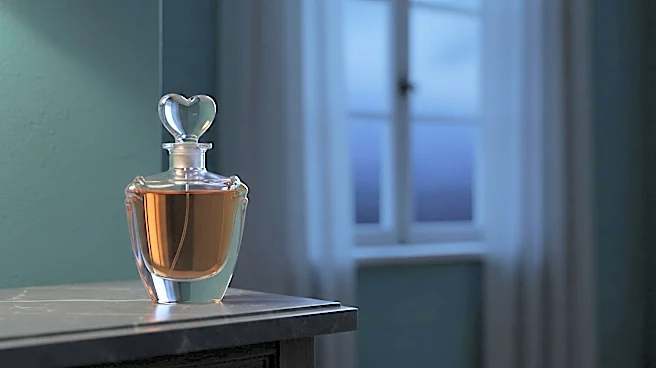
To understand L'Heure Bleue, you have to travel back to Paris before the First World War. Jacques Guerlain crafted this scent to capture the feeling of twilight, that fleeting moment when the sky is a deep, velvety blue and the world seems to hold its
breath. The official note pyramid lists a bright opening of bergamot and a distinctive, slightly medicinal anise. This quickly gives way to a lush floral heart of carnation, violet, and neroli before settling into a powdery, warm base of iris, vanilla, benzoin, and tonka bean. It’s a complex journey that avoids the straightforwardness of many modern fragrances, opting instead for a hazy, blended quality that feels both romantic and introspective.
The 'Hidden Note' Unveiled
The true magic of L'Heure Bleue—its so-called “hidden note”—isn’t a single ingredient but a masterful accord. It's the fusion of powdery iris, almond-like heliotrope, and sweet anise that creates its signature scent profile. Some describe this accord as smelling like a sophisticated pastry shop or a marshmallow, a gourmand sweetness that is never childish. This 'pâtisserie' quality is balanced by a cool, almost melancholic powderiness from the iris and violets. The result is a fragrance of beautiful contradictions: it is comforting yet distant, warm yet cool, nostalgic yet timeless. It’s this complex interplay, this feeling of gentle melancholy and quiet contemplation, that forms the perfume's unforgettable and elusive heart.
The Gentle Precursor: Après l'Ondée
To appreciate L'Heure Bleue, one must know its older sibling, Après l'Ondée (1906). Both fragrances share a DNA rich in iris and violet, creating a similar powdery, floral feel. However, Après l'Ondée, meaning 'After the Rain Shower,' is more ethereal and delicate. It’s a watercolor painting of a wet garden, brighter and more fleeting. L'Heure Bleue, in contrast, is an oil painting. It’s richer, denser, and spicier, with the addition of notes like carnation and that prominent anise and vanilla accord, giving it a warmer and more profound character. If Après l'Ondée is the quiet after a storm, L'Heure Bleue is the contemplative dusk that follows a perfect day.
A Modern Descendant: Esprit d'Oscar
The influence of L'Heure Bleue extends into the 21st century, most notably with Oscar de la Renta's Esprit d'Oscar (2011). Often described as a modern interpretation or a more approachable cousin to the Guerlain classic, Esprit d'Oscar shares the powdery heliotrope and floral heart. However, it dials down the spicy, medicinal anise note that can be challenging for some in L'Heure Bleue. It opens brighter, with more pronounced citrus, and has a clean, creamy smoothness that feels contemporary. For those who find L'Heure Bleue too vintage or melancholic, Esprit d'Oscar offers a sunnier, more straightforward take on the same beautiful theme, proving the timelessness of the original's core idea.