




The Illusion of Authenticity
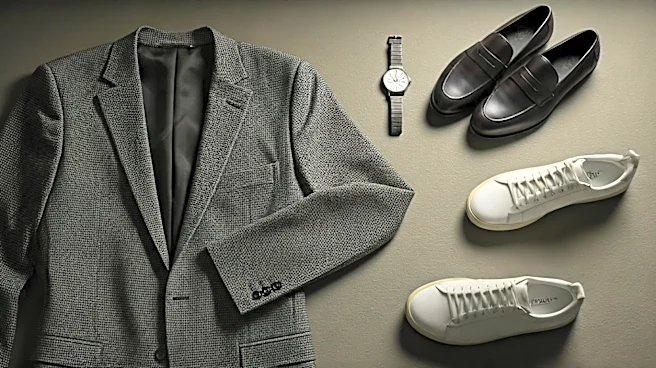
Let’s be clear about what made high-low dressing so compelling in the first place. It was about confidence and personal narrative. It was the art student in a vintage band tee with her grandmother's Chanel bag, or the tech CEO pairing a Savile Row blazer
with beat-up sneakers. The 'high' elevated the 'low,' and the 'low' grounded the 'high,' making it feel real, personal, and effortlessly cool. The magic was in the story each combination told about its wearer. But the recent spectacles in Paris have replaced this authenticity with a highly produced, focus-grouped version of rebellion. What we're seeing now isn't personal style; it's a marketing memo on how to look 'relatable' while spending a fortune, and the effect is jarringly hollow.
When 'Distressed' Is Just a Costume
One of the most egregious offenders is the trend of hyper-distressed luxury. We’ve seen it in the form of $3,000 sweaters artfully riddled with holes and thousand-dollar jeans pre-stained to mimic years of hard labor. This isn't high-low; it's a theatrical performance of wear and tear. True high-low works when the 'low' element is genuine—a real, lived-in pair of Levi's, a perfectly worn-in Hanes tee. When a luxury brand sells you a pre-destroyed garment, it strips away the entire point. It’s an expensive costume of a life you haven't lived, a shortcut to a story that isn't yours. Instead of looking coolly indifferent, it looks like you’re trying way too hard to prove you don't care, which is the most desperate look of all.
The Celebrity Street Style Problem
The sidewalks of Paris during fashion week have become a secondary runway, and this is where the high-low illusion truly crumbles. We're flooded with images of celebrities in meticulously curated 'off-duty' looks. A seemingly simple outfit—a white t-shirt, jeans, and sneakers—is deconstructed by fashion blogs to reveal a $700 tee from The Row, $1,500 'vintage-style' jeans from Balenciaga, and a pair of limited-edition Nikes that cost more than a used car. This isn't high-low; it's just 'high-high' masquerading as something accessible. It co-opts the language of everyday style to sell an entirely unattainable fantasy. The result is that high-low dressing, once a democratic ideal, starts to look like an exclusive club where even the 'low' is prohibitively expensive.
Losing the Anchor
Great high-low styling hinges on proportion and focus. It requires an 'anchor'—that one spectacular piece that does the heavy lifting. It could be a perfectly tailored coat, an iconic handbag, or a piece of investment jewelry. This hero item elevates everything around it. But the current trend, especially on the runway, is a chaotic jumble. Instead of one anchor, we get a messy pile-up of mid-tier statement pieces, clashing logos, and confusing silhouettes. There’s no focal point, no visual hierarchy. When a look consists of a loud graphic hoodie, equally loud track pants, and attention-seeking sneakers, there's no 'high' and no 'low.' It’s just noise. This aesthetic confusion makes the entire outfit look muddled and, ironically, cheapens the individual value of each piece.