
The Brotherhood of the Plastic Cup
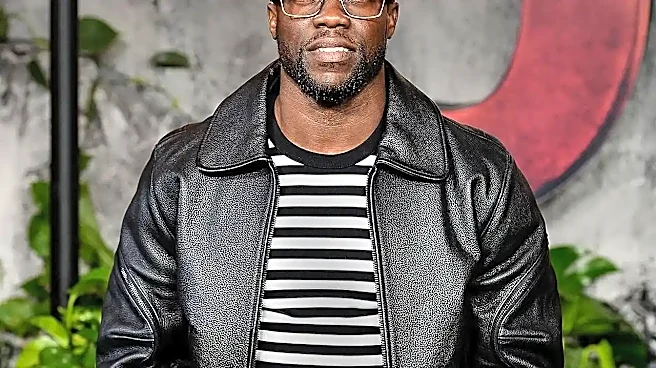
To understand the evolution, you have to start with the original cast. For years, Kevin Hart was synonymous with the “Plastic Cup Boyz,” his crew of close friends and fellow comedians including Joey Wells,
Will “Spank” Horton, and Na’im Lynn. They weren’t just his buddies; they were his opening acts, his creative foils, and a core part of his touring machine. Their specials, often presented by Hart himself, showcased a raw, collective energy. This dynamic defined Hart’s early-to-mid career ascent: a tight-knit group with an undeniable chemistry, taking on the comedy world together. For many fans, the Boyz were an inseparable part of the Kevin Hart experience, the trusted supporting cast in the movie of his life.
From Comedian to Corporation
The “cast change nobody saw coming” wasn’t a dramatic, public split with his friends. It was a strategic, corporate evolution. As Hart's star power exploded, his ambition grew beyond the stage. He founded two companies, HartBeat Productions for film and TV, and Laugh Out Loud for digital content. In 2022, he merged them into a single entity, Hartbeat, and raised $100 million from private equity, valuing the new company at a staggering $650 million. Suddenly, the cast wasn’t just a few comedians in a tour bus; it was a full-fledged media company with divisions for film, media, and branded partnerships. The goal was to build an entertainment enterprise that could create projects even without Hart in a starring role. This was the real plot twist: the cast change was Hart graduating from the lead actor in his own troupe to the CEO of a comedy conglomerate.
The Unchanging, Universal Character
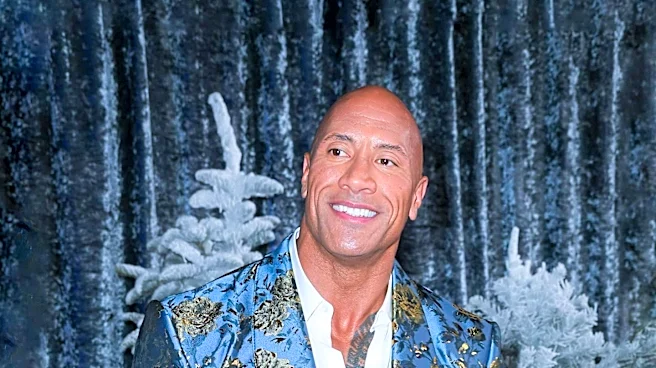
So how did Hart’s comedy survive this massive structural shift? The answer lies in the character he perfected years ago. Hart’s on-stage persona is built on a universally relatable foundation of self-deprecation. He finds humor in his own perceived shortcomings: his height, his family drama, his fears, and his personal failings. This “grown little man” persona is a constant, a reliable comedic anchor that works opposite anyone, whether it's his old friends from Philly, a co-star like Dwayne “The Rock” Johnson, or a legacy actor like Bryan Cranston. His core comedic product isn't dependent on a specific partner's energy. It’s an endlessly adaptable character study of a flawed everyman striving to be better. That character is so well-defined that the supporting cast became interchangeable, allowing his brand to scale without losing its essence.
Building an Ecosystem, Not Just a Show
With the Hartbeat empire established, Hart’s role shifted from simply being the star to becoming a kingmaker. Instead of just touring with the Plastic Cup Boyz, he created a platform—Hartbeat and the LOL Network—that could finance, produce, and distribute content for a whole new generation of talent. The company's mission became about creating comedic experiences and keeping the world laughing, a goal bigger than any one person. This strategy was brilliant. By building an ecosystem, he made himself the gravitational center of a much larger comedic universe. He's no longer just a member of a cast; he's the producer and casting director for dozens of projects. This insulates his brand from creative fatigue or reliance on any single partnership. His style didn't just survive the expansion of his professional circle; it was the engine that fueled it, proving that the strongest brands are the ones that can evolve from a solo act into a thriving community.