




The Slogan Problem
Hollywood has a recurring issue with depicting angry women. Too often, a character’s legitimate fury is flattened into a single, meme-able moment of defiance or a cathartic, direct-to-camera monologue. Think of *Captain Marvel*’s “I have nothing to prove
to you,” or the on-the-nose speeches in *She-Hulk*. While often well-intentioned, these scenes can feel like thematic signposts rather than organic character beats. The anger is declared, not demonstrated. It becomes a slogan—a powerful but dramatically inert statement of purpose. It tells us the character is angry, but it doesn't always make that anger the engine of the plot. The result is a story that happens *around* an angry woman, not a story that is driven *by* her anger. For Supergirl, a hero who lost her entire world and has lived in the shadow of a more beloved cousin, the potential for rage is immense. The challenge is making it matter.
The Perfect Source Material
Fortunately, the filmmakers aren’t starting from scratch. The movie is based on the 2021-2022 comic series of the same name by Tom King and Bilquis Evely, which is widely regarded as one of the best Supergirl stories ever told. This isn’t the cheerful, optimistic Kara Zor-El many audiences know. Having just turned 21, this Supergirl is adrift, drinking in alien bars, and quietly simmering with a lifetime of unprocessed trauma. She’s not just an alien; she's a refugee, a survivor of planetary genocide who remembers her home, her parents, and everyone she ever knew turning to dust. Her rage isn't a sudden development; it’s a low-grade fever that’s been burning for years. The comic’s plot kicks off when a young alien girl, Ruthye, seeks to hire a killer to avenge her father’s murder. She finds Kara instead, and the two embark on a brutal, galaxy-spanning quest for justice.
The Western Framework
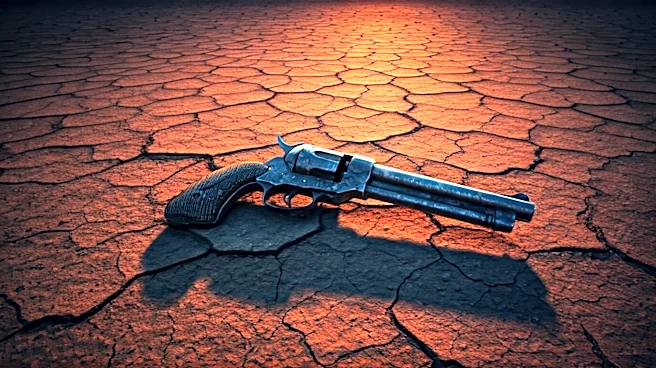
Here lies the key production choice: fully embracing the comic’s genre foundation as a classic Western. The story is a revenge quest, structured like *True Grit* in space. It has all the hallmarks: a jaded, hard-drinking veteran (Kara), a determined youngster seeking justice (Ruthye), a clear villain, and a harsh, unforgiving frontier (the cosmos). This isn't just a stylistic flourish; it’s a narrative machine perfectly designed to process the story’s core theme. In a Western, the journey *is* the plot. The pursuit of a villain across a hostile landscape forces the protagonist to confront their own code, their capacity for violence, and the true cost of vengeance. By adopting this framework, the film can move beyond simply stating that Kara is angry. Her anger becomes the fuel for the journey. Every decision she makes—to pursue, to fight, to show mercy or not—is a direct manifestation of her internal struggle.
Making Rage the Engine of the Plot
Framing *Woman of Tomorrow* as a revenge Western allows the filmmakers to externalize Kara's internal state. We don’t need a monologue explaining her rage when we can see it in her relentless pursuit of the villain, Krem of the Yellow Hills. We don't need a flashback to Krypton's destruction to understand her pain when we see her identify with another girl who has lost her father. The plot mechanics of the chase—tracking leads, surviving ambushes, and facing moral compromises—become the physical expression of her emotional journey. Her fury isn't a state of being; it's an action. It's the thing that keeps her and Ruthye moving from one planet to the next. This approach transforms rage from an abstract concept into a tangible, forward-moving plot device. It gives the character agency and ensures that the film’s theme is woven into every scene, rather than being sprinkled on top in a few key moments of dialogue.