








The Birth of a Revolution
To understand the Dutch soccer psyche, you have to start in the 1970s with two words: Total Football. Championed by coach Rinus Michels and personified by the impossibly elegant Johan Cruyff, it was a tactical system that felt more like a philosophy.
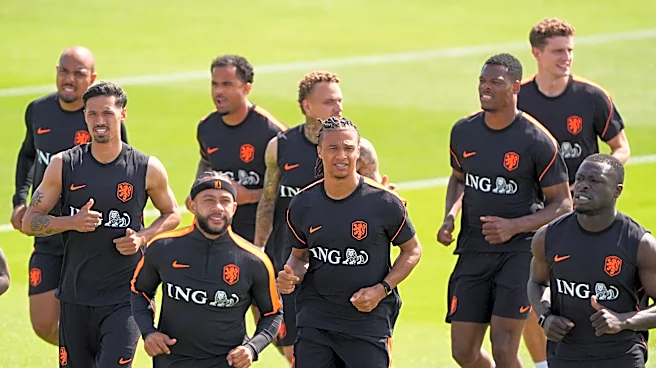
In Total Football, any outfield player could take over the role of any other player in the team. Defenders surged forward, attackers dropped back, and positions became fluid, interchangeable suggestions. The result was a mesmerizing, high-pressure symphony of movement that overwhelmed opponents. The team, clad in their now-iconic bright orange (Oranje) kits, didn't just play soccer; they presented an idea about what the game could be. It was intelligent, creative, and breathtakingly ambitious. This wasn't just about winning; it was about winning with a non-negotiable sense of style.
The Glorious Failures of the 70s
This revolutionary style took the Netherlands to the brink of ultimate glory twice in four years, only to have it snatched away. In the 1974 World Cup final, they faced host nation West Germany. The Dutch scored a penalty in the second minute before a single German player had even touched the ball—a perfect encapsulation of their dominance. But their swagger turned to hubris. They seemed more interested in humiliating their rivals than in securing the win, and the methodical Germans clawed their way back to a 2-1 victory. It was a stunning upset. Four years later, in 1978, they reached the final again, this time against host nation Argentina. In a hostile Buenos Aires atmosphere and without Cruyff, who refused to play, they fought to a 1-1 draw, hitting the post in the final minute of normal time. They lost 3-1 in extra time. Two finals, two losses. The legend of the brilliant, beautiful loser was born.
The Exception That Proves the Rule
The narrative of being “trophyless” isn’t entirely accurate, and the exception is a glorious one. At the 1988 European Championship, a new golden generation emerged. Led by the formidable trio of Ruud Gullit, Frank Rijkaard, and Marco van Basten, the Dutch finally conquered their demons. In the semi-final, they exorcised the ghost of 1974 by defeating West Germany on their home soil. Then, in the final against the Soviet Union, van Basten scored what is widely considered one of the greatest goals in soccer history—an audacious, seemingly impossible volley from a tight angle. They had won a major trophy. Yet, this triumph has never quite erased the sting of the World Cup failures. The World Cup is the sport’s Everest, and for the Dutch, it has remained just out of reach, making the Euro '88 win feel more like a beautiful interlude than a rewriting of their destiny.
The Modern Agony and a Lost Identity
The pressure to finally win the World Cup came to a head in 2010. The Netherlands again reached the final, this time against a Spanish team that had, ironically, perfected a possession-based style heavily influenced by Johan Cruyff's philosophy at Barcelona. But this Dutch team was different. Gone was the free-flowing idealism of the 70s, replaced by a pragmatic, cynical, and often brutal physicality. It was a team that seemed willing to abandon its identity to win at all costs. The final against Spain was an ugly, foul-ridden affair, with Dutch defender Nigel de Jong's infamous “karate-kick” tackle on Xabi Alonso symbolizing their approach. They lost 1-0 in extra time. It was the worst of both worlds: they didn't win, and they didn't do it beautifully. They had betrayed their own legacy and still came home empty-handed, completing a trifecta of World Cup final defeats.